

Parks Gardeners, Supervisors Keep Growing in Queens
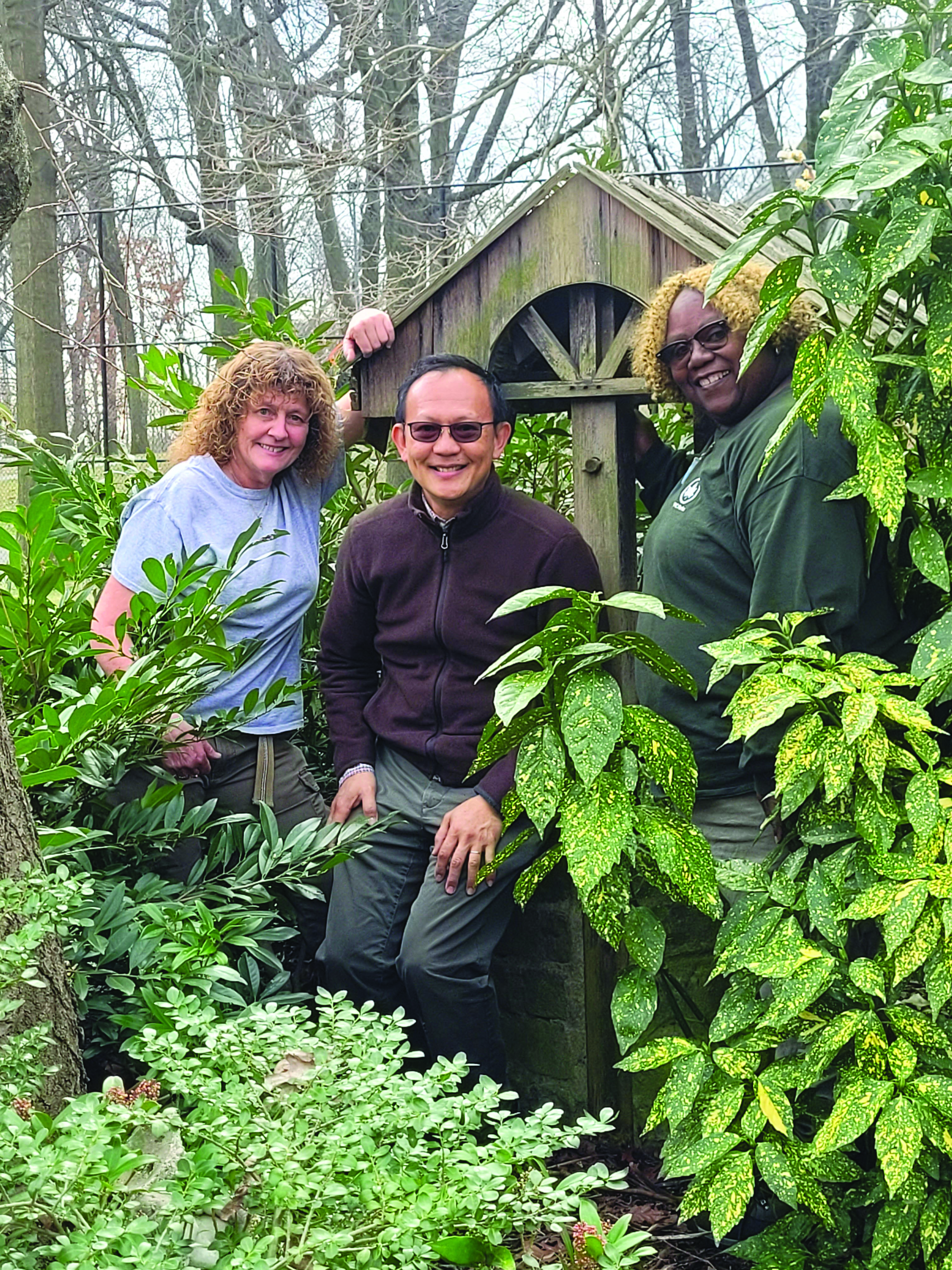
Story and photos by ACACIA RODRIGUEZ
Just beyond the Forest Park Carousel in Queens, on an unassuming road leading to a rusted roof barn, is an oasis of greenery in the midst of the bustling city. Three sophisticated and highly organized greenhouses are the domain of park support staff in multiple DC 37-covered City titles, including Local 1507 NYC Department of Parks Gardeners and Local 1508 Uniformed Park Officers.
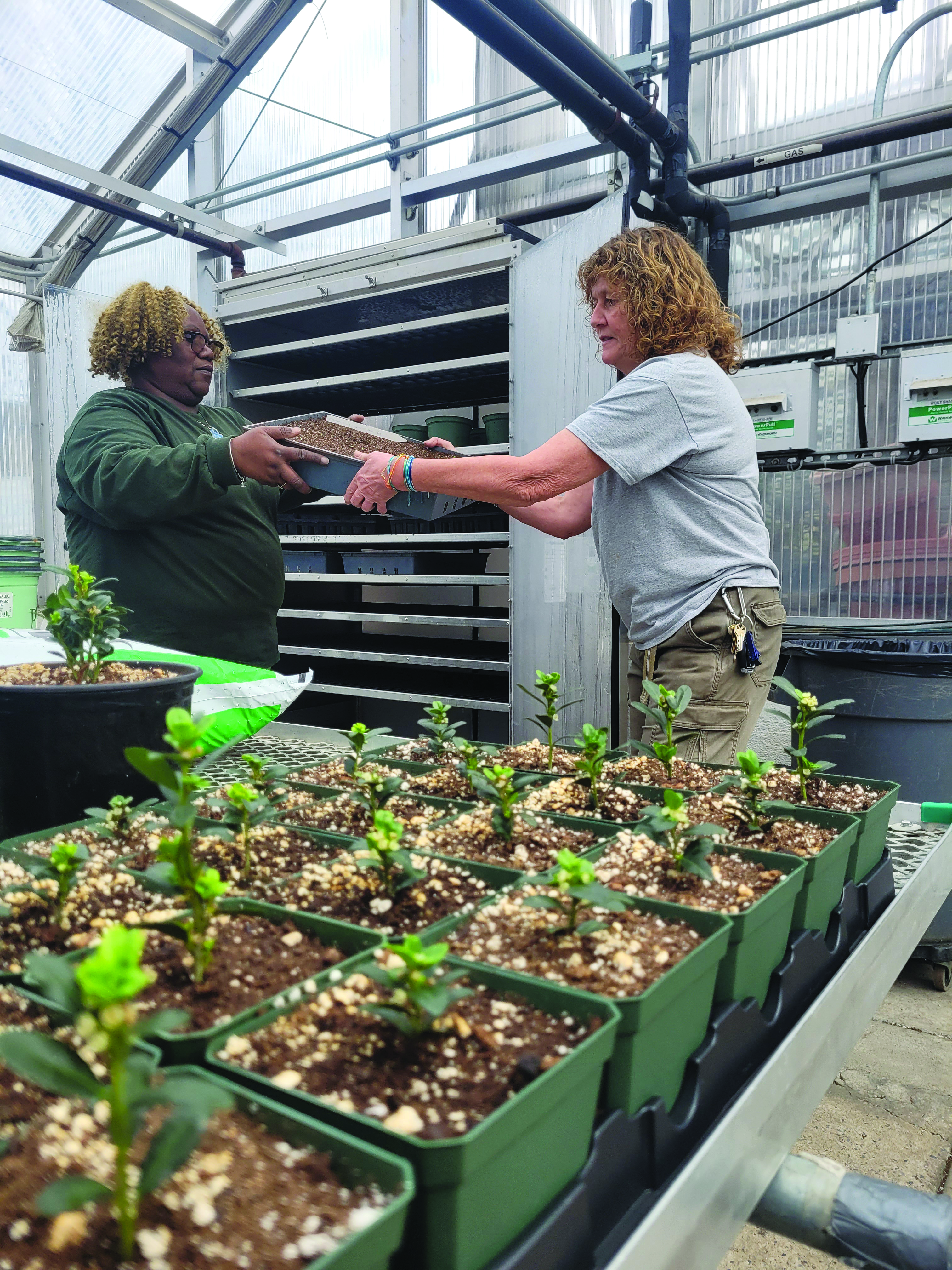
Gardeners Joan Thorp and Sally Frazier propagate, survey, and grow flowers and foliage that are later transported to municipally-owned public parks in Queens and Brooklyn. These greenhouses are responsible for producing hundreds of thousands of plants needed annually.
With automated temperature controls and windows for ample sunlight, the greenhouses remain fairly temperate year-round, allowing gardeners to grow plants and flowers from seeds and cuttings regardless of the season. Many of the plants grown from seeds start their lives in ‘House One’ and ‘House Two’ before maturing enough to move outside in the parks.
“Each bench in my greenhouse holds 1,276 plants. I have to know in my head that if someone wants 2,000 dusty miller, I’m going to need a bench and a half for that order,” Thorp said. “You’re going to have some crop failure so you have to overseed. Not every packet of seed germinates 100% every time.”
Proper planning at the start of the germination process is crucial. There are many things to consider: how big the plants will get and how much space they will need throughout their growing process. Factors vary for each type of plant. At this point of her horticulture career, Thorp has worked out her process.
“Everything has to be set up in advance before I start sowing seeds. I don’t want to be forced to stop working when I’m really busy in March and try to reposition things to fit,” Thorp said. “You could easily spend half your time shuffling things around if you don’t plan it out correctly.”
Thorp explained that this is not the kind of job you’re going to learn from a book. There is constant hands-on learning and curiosity needed in the profession. After almost 40 years, she admits she still doesn’t know everything.
“There’s always something new to learn, new techniques, even new names of plants that have changed over time.”
For plants that take too long to grow from seed, the group incorporates cuttings from healthy plants. This is where Frazier comes in.
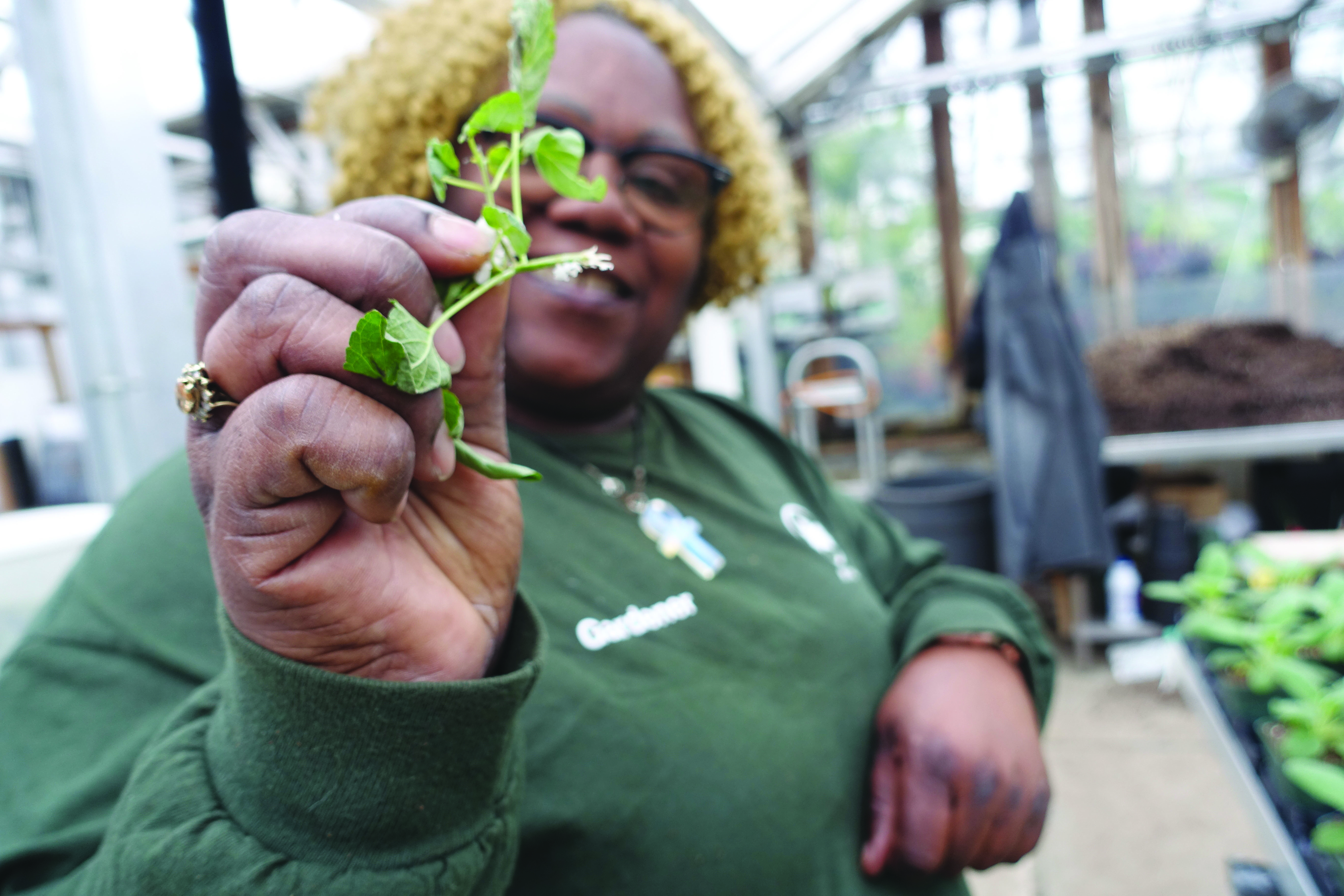
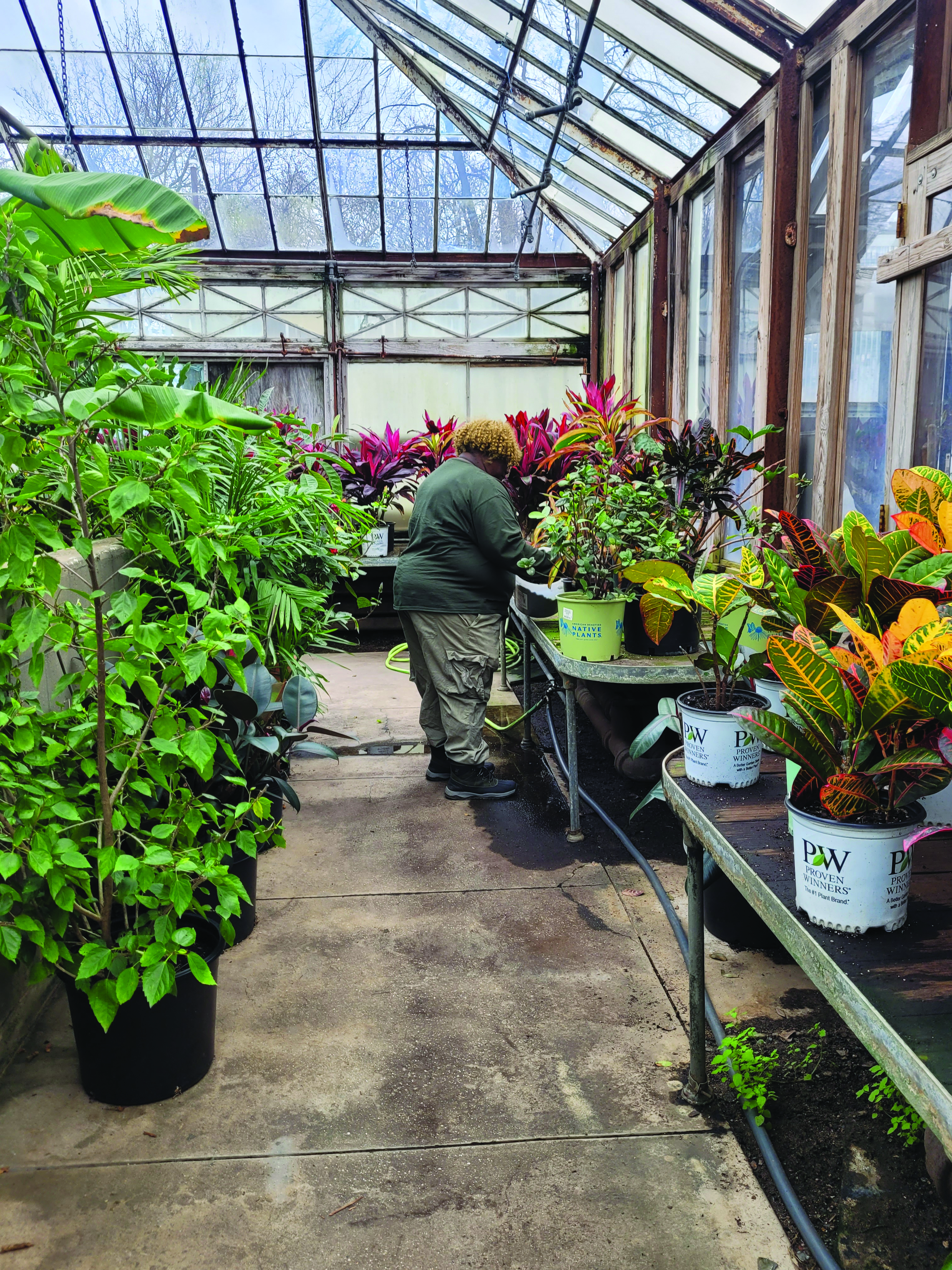
In the greenhouses she manages, tons of plants are propagated by cuttings or division. To propagate a plant by cutting means taking a sample from a mature plant and planting it into a rooting material like perlite to encourage growth. Ideally, each cutting will become a new plant, but only if conditions are just right. Frazier’s houses are typically more damp and moist due to the types of plants she grows.
“We do a lot of cuttings, purchase a few, and maintain the plants by bringing them in during the colder seasons here,” Frazier said. “Some of them give us a hard time, but we divide them up and do trial experiments to see what the best growing conditions are.”
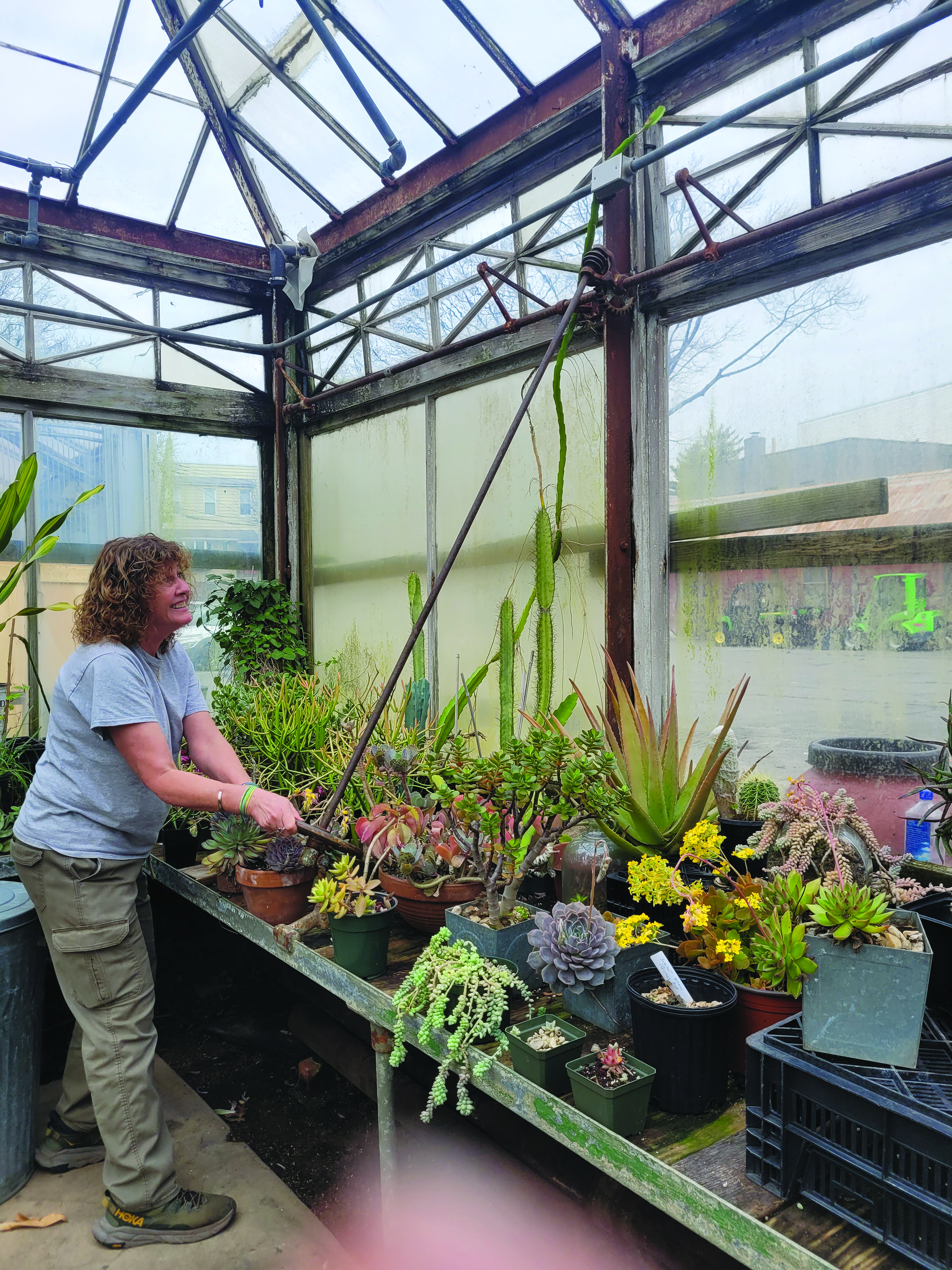
In the center of the room among the larger plants is a 40-foot fruit-bearing cactus as old as the historic greenhouse it sits in. It only flowers at night. Frazier recalled the cactus broke at some point so she healed the cactus and grew the broken-off portion into another plant.
Frazier loves the space she works in. She’s been with the Parks Department for 33 years but never planned to be an indoor greenhouse gardener when she started.
“As indoor gardeners here, we’re like doctors, and all the plants are our patients,” Frazier said.
At the end of the season, field gardeners bring the plants back into the greenhouse where they are propagated to produce more plants. From Blue Salvia to Pineapple Brandy, Canna, Coleus, and Birds of Paradise, Frazier grows annuals and perennials with great success. She passes that knowledge on to her colleagues.
“On some days, I coach the JTPs on how to fertilize, pot up, transport, and propagate cuttings,” Frazier said. (Learn more on the City’s Job Training Participants elsewhere in this issue).
The gardeners are supported by members of Local 1508, including Director of Horticulture Kean Eng, who transferred in 2018 to the Queens Greenhouses from Director of Horticulture in Brooklyn. As director, he ensures the gardeners have the tools they need so they can focus on growing plants.
“I have to make sure I order and buy supplies so they come on time,” Kean said. “If I delay one part, it can have a domino effect on production.”
Each season, the indoor gardeners tend to the plants, preparing them to be planted in flower beds at parks and playgrounds. After gardeners in the field set the beds, a team of outdoor gardeners care for the plants for the duration of the season. Based on how they hold up, field gardeners request plants of their choosing several months in advance for the following year’s season.
“I’m very proud to say the Parks staff can grow so much here,” Eng said. “There are not many horticultural organizations that grow on this scale.”
There is never a point when nothing is growing in the Queens greenhouses.
“I like working here because the plants make people happy,” Frazier said. “They walk past our garden beds and compliment our work, and it cheers them up. You never know what a person’s going through, and it’s great that our work helps.”
The Queens Greenhouses are open to the public one day per year during the last week of May. Stay tuned to NYCparks.gov for updates on the upcoming open house. For information about open positions in the Queens Greenhouses and Parks Department, visit nycgovparks.org/opportunities/jobs.