

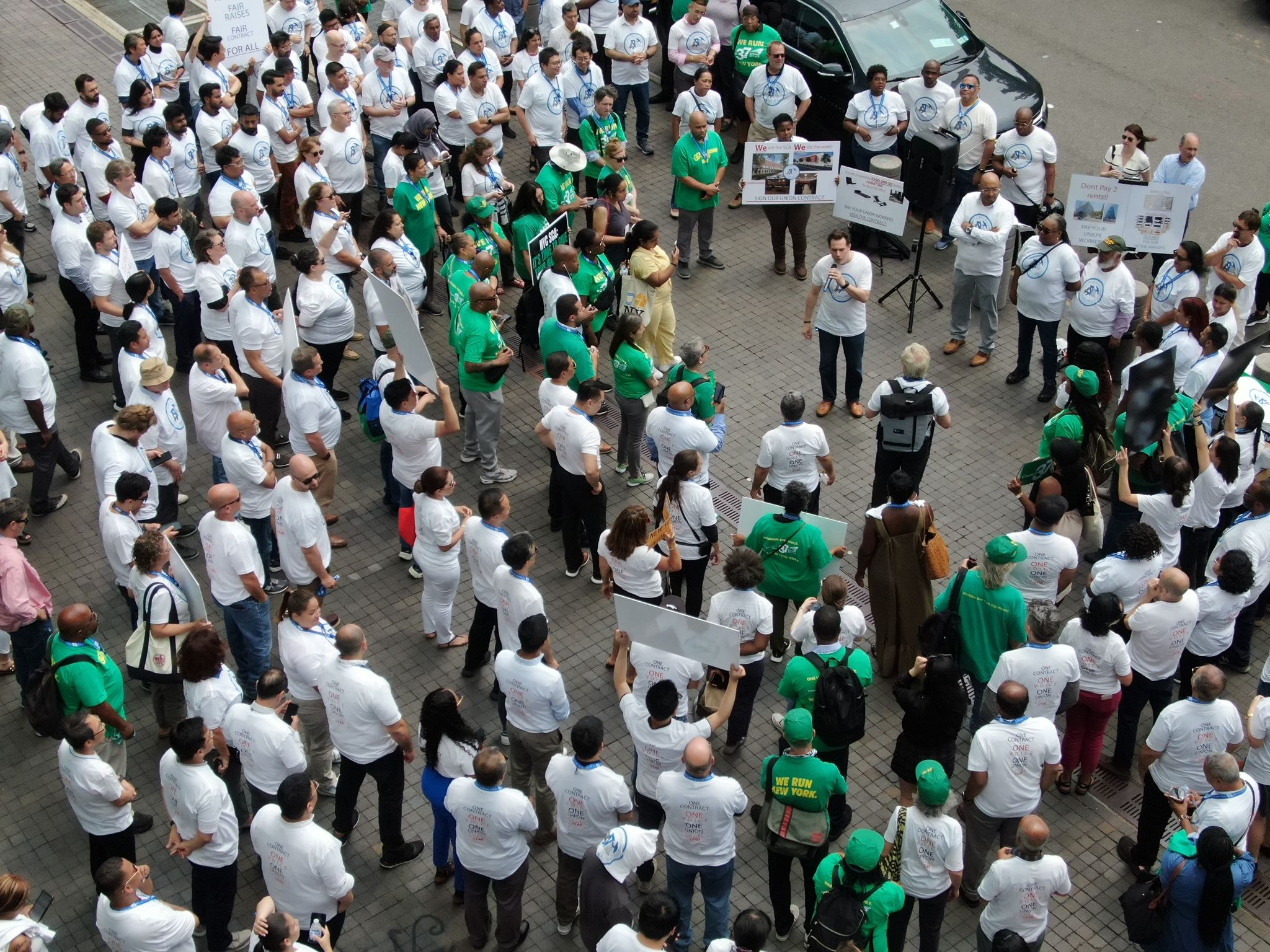
Center For Brooklyn History: Building the Community’s Archive
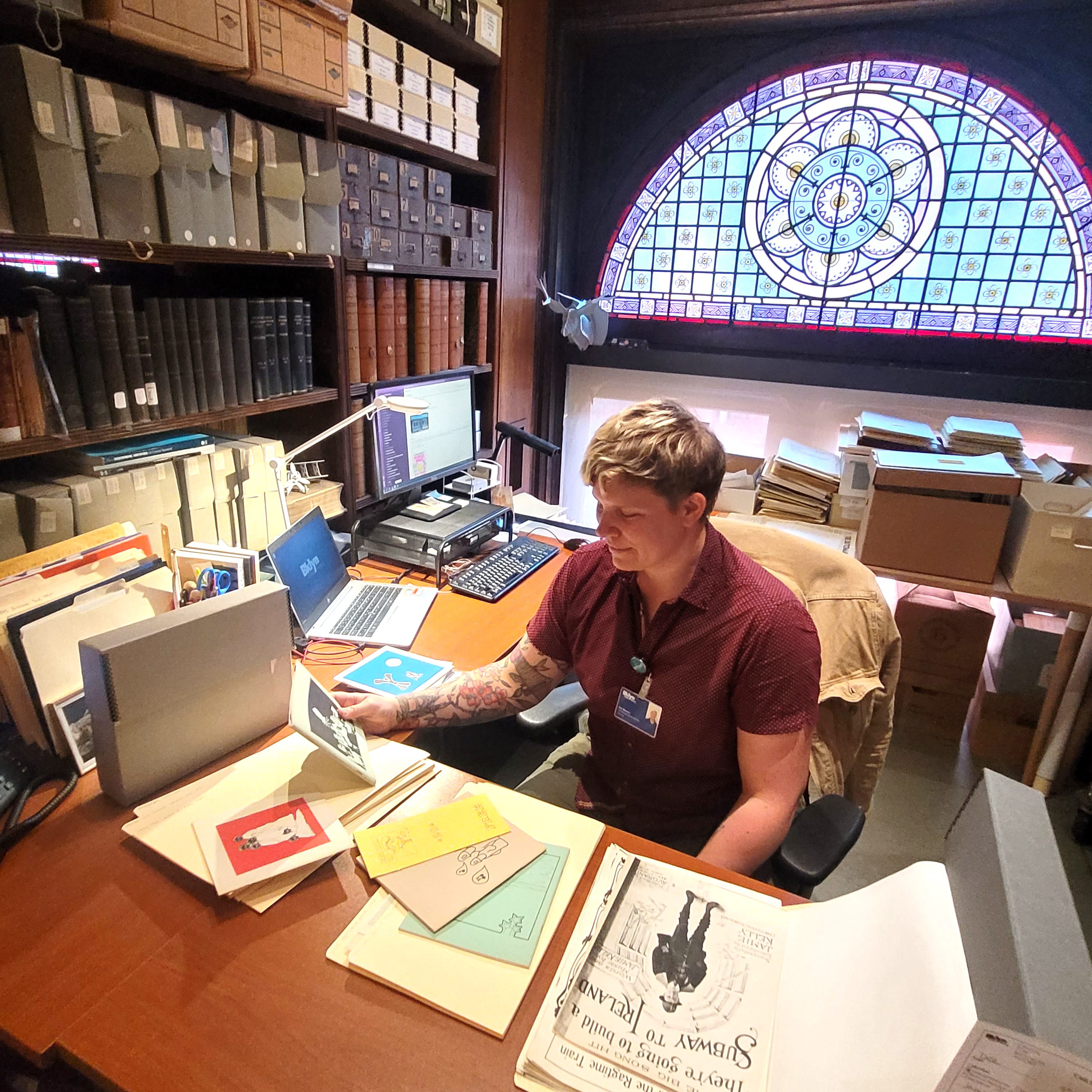
Story & Photo by ACACIA RODRIGUEZ
As an archivist, fourth-generation Brooklynite Dee Bowers ensures the world’s largest collection of materials about Brooklyn remains at the fingertips of its patrons. From high school yearbooks to independently published magazines, Bowers and the Local 1482 Brooklyn Library Guild at the Center for Brooklyn History (CBH) organize, catalog, and preserve, providing access to historians, students, educators, and researchers worldwide.
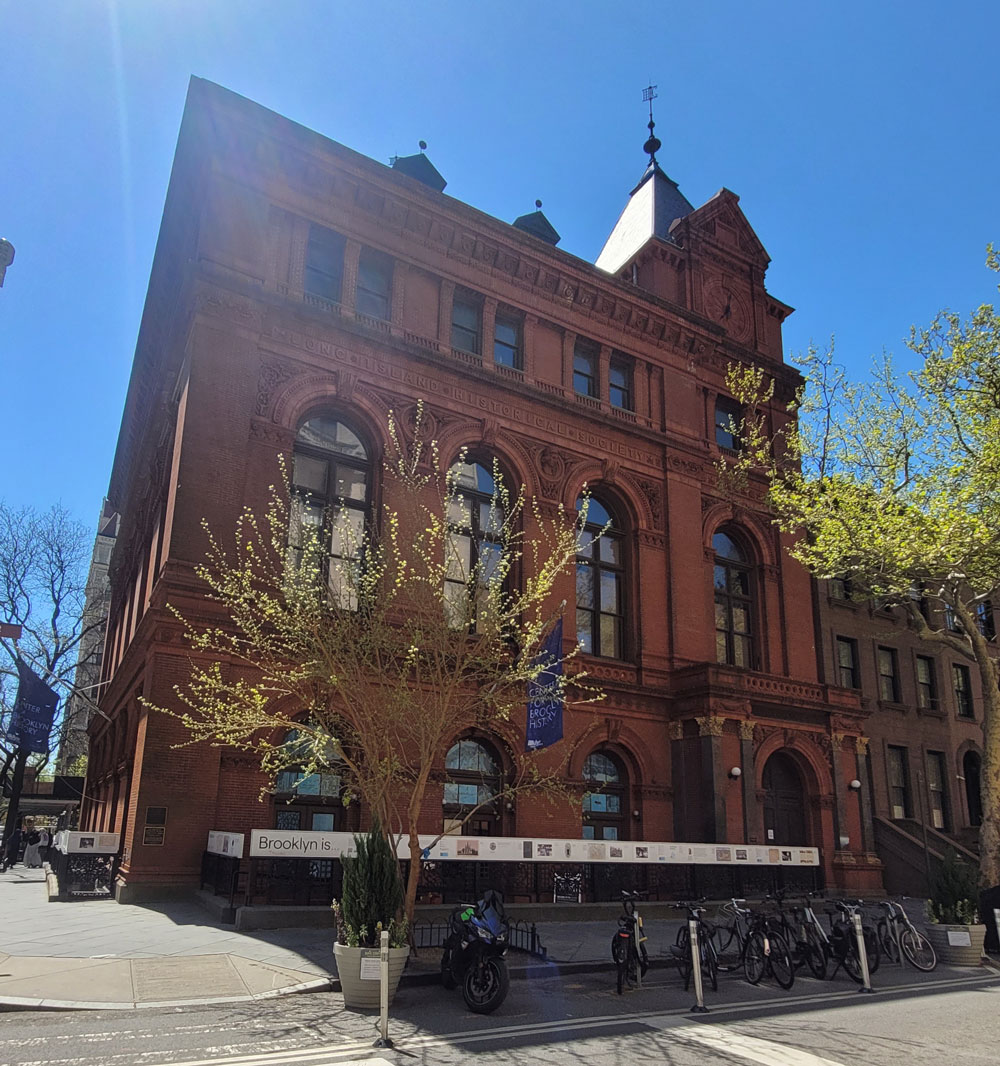
CBH is housed in a national historic landmark building designed by George B. Post that has remained largely the same since 1881. The Pierrepont Street building was formerly home to the Brooklyn Historical Society and Long Island Historical Society before the two organizations merged with Brooklyn Public Library’s local history collection. In 2020, Bowers helped manage the delicate process of consolidating the archive of historical objects and documents.
An archivist’s role is similar to a librarian, but instead of dealing in books and publications, they manage “special collections,” including unique or unpublished materials such as handwritten documents, correspondences, photographs, maps, historical artifacts, paintings, and audio-visual materials like oral history recordings.
“We also maintain a robust web archive,” Bowers said. “Our job is to care for the collection materials, preserve them, make them available to the public for research, and save them for posterity and the future.”
Bowers is one of three archivists at CBH and one of the first to work for Brooklyn Public Library.
“I studied art history as an undergraduate, then realized I wasn’t interested in curating and didn’t want to get a PhD or be in academia,” Bowers said. “I decided to go to grad school and ended up in a dual-degree program at Pratt Institute for Art History and Library Science.”
After graduating, Bowers worked as an archivist for a private collection owned by an art gallery until burnout set in. When Brooklyn Public Library was hiring an archivist, Bowers jumped at the chance, delighted when the opportunity for such a rare position became available.
“It seemed basically like my dream job,” Bowers said. “You never know what will be crucial to historian work, but also what can thrill and delight a fourth grader or help high school students see their neighborhood differently. It’s always exciting to see students of all ages interacting with the collections. It really underscores why we do this. We’re the public library; we serve everybody.”
Archivists wear many hats, and Bowers’ workflow varies daily — processing materials that come into the collection, organizing them, taking on any preservation work needed, writing collection guides, and making the items available to researchers.
“Processing is so satisfying when you can get absorbed in working with a collection, learning about it, writing the guide, and seeing researchers use it,” Bowers said.
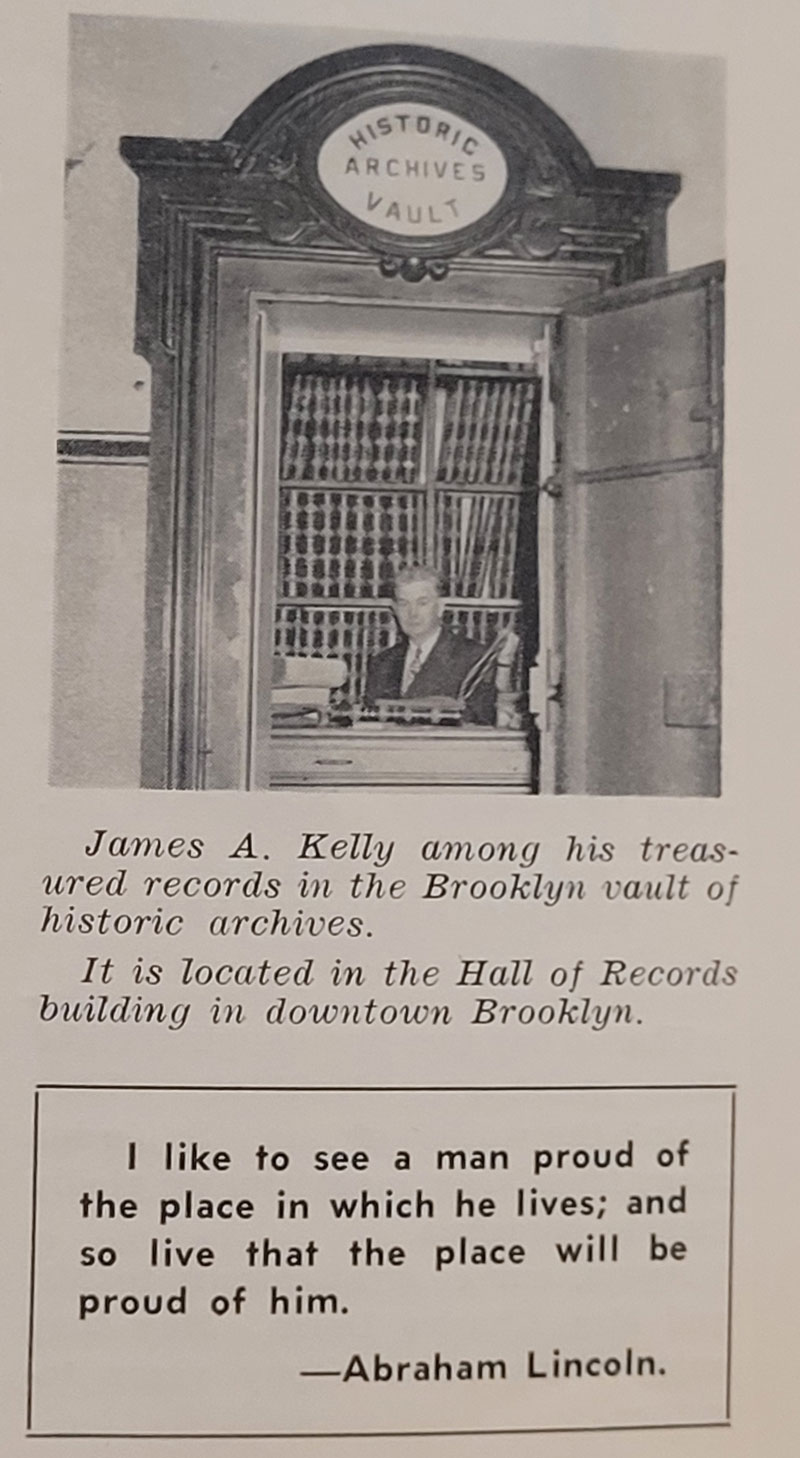
One of Bowers’ recent finds are materials surrounding James A. Kelly, an Irish immigrant who worked as a subway construction foreman in 1916. He had a successful career as a singer, composer, and vaudeville performer before being appointed the First Deputy County Clerk of Kings County in 1926, and later Borough Historian.
“Kelly believed that the history of a community belongs to the people, and that resonated with me because that’s exactly how we try to do our work at CBH,” Bowers said.
Processing a collection depending on its size can take months at a time, so the CBH collections team strategizes their duties to ensure the library continues to run smoothly. They each contribute to public outreach, answering questions, creating content for CBH social media channels, writing blog posts, supporting the programming team, presenting at conferences, and contributing to digitizing materials for the public web archive.
The work they do outside of their typical job descriptions is due mainly to City cuts to the library’s budget. The collections team has not been fully staffed for several years, and hiring freezes have prolonged and worsened their situation.
Bowers is optimistic, saying “The City Council has our backs, and they have a history of standing up to [the Mayor], so we have our fingers crossed.”
Bowers hopes to continue building solidarity and community with union siblings across the library network, throughout budget season, and beyond.
“One of the big things that I appreciate the union for is knowing I have a safety net,” Bowers said. “I feel like I can speak up, say what I need to say, and advocate for the collections, for my work, without fearing repercussions from management because union status gives us protection.”