

Local 2906’s Seafaring Activities Keep NYC’s Waterways Clear
Story and Photo by ACACIA RODRIGUEZ
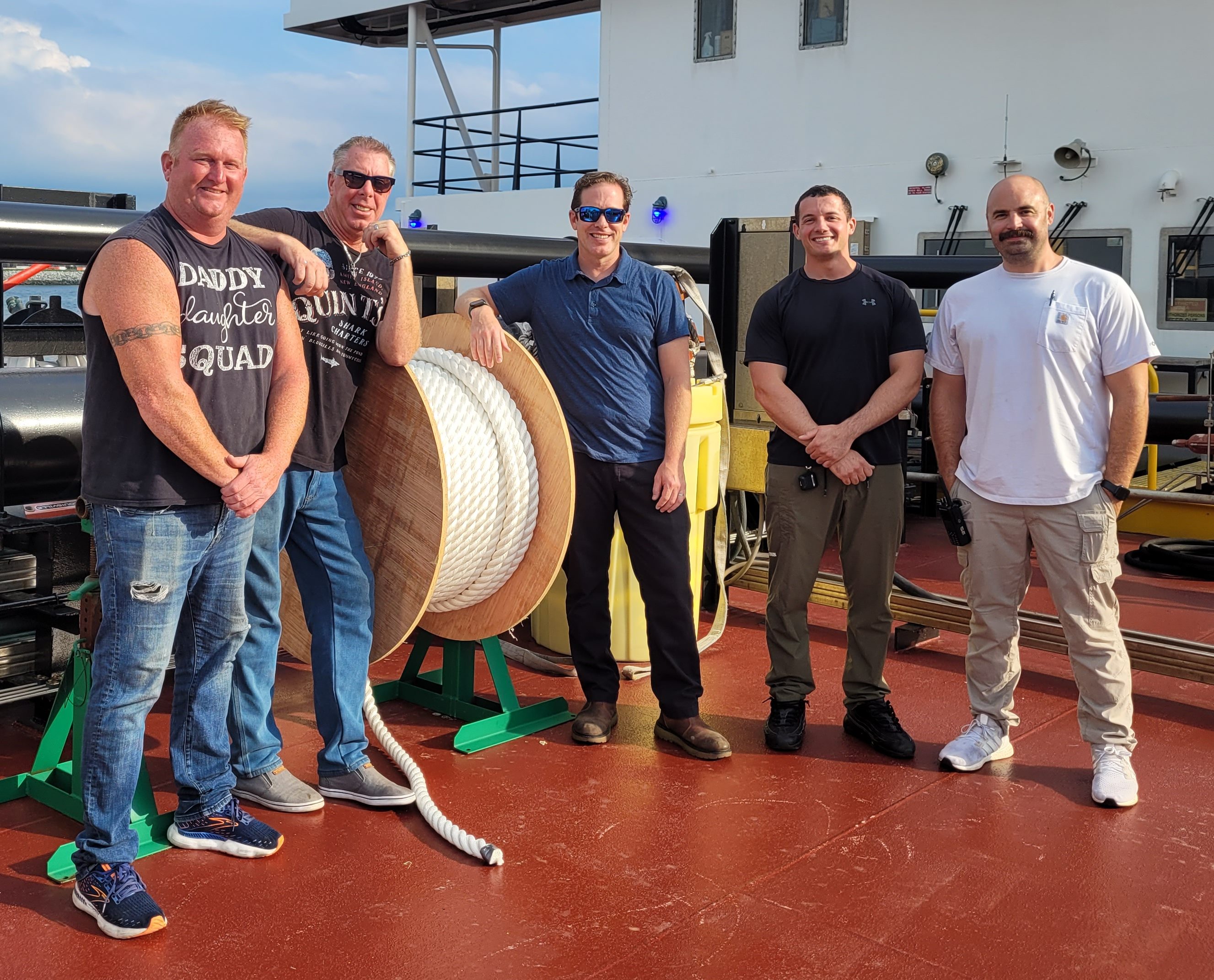
Wide, equipment-laden sludge boats sail through New York Harbor multiple times a day, seven days per week, transporting wastewater between treatment facilities to keep New York City waterways clean. Beginning at 7 a.m., members of Local 2906 NYC Marine Workers fill one of five boats with about 140,000 cubic feet of sludge to be refined for composting, fuel, or energy at one of the Department of Environmental Protection’s (DEP) 14 wastewater resource recovery facilities.
Decades ago, the City would dump waste directly into the surrounding waterways. Now, DEP collects waste into the sewer system, sorts it, decomposes it within digestive tanks so the sewage can be broken down, disinfects it, and sends it to dewatering facilities to compress the sludge into cakes.
“Once ocean-dumping was discontinued, sludge boats became efficient tools to assist the waste treatment process because you can quickly move so much,” Captain Dave Gagliano said. “There has been tremendous improvement in the water quality in the harbor due to this practice, which is great.”
Gagliano first began working as a mate on tugboats that transport oil barges, where he studied for the Coast Guard exams and got familiar with handling the ships while upgrading his license. He’s worked for DEP for the last 10 years.
“Once you become a captain, you’re in charge of everything on the boat and you have a different Coast Guard license,” he said. “We’re required to have pilotage to be familiar with every part of New York Harbor that we travel to, and must be able to draw all the maps of the NYC waterways from memory.”
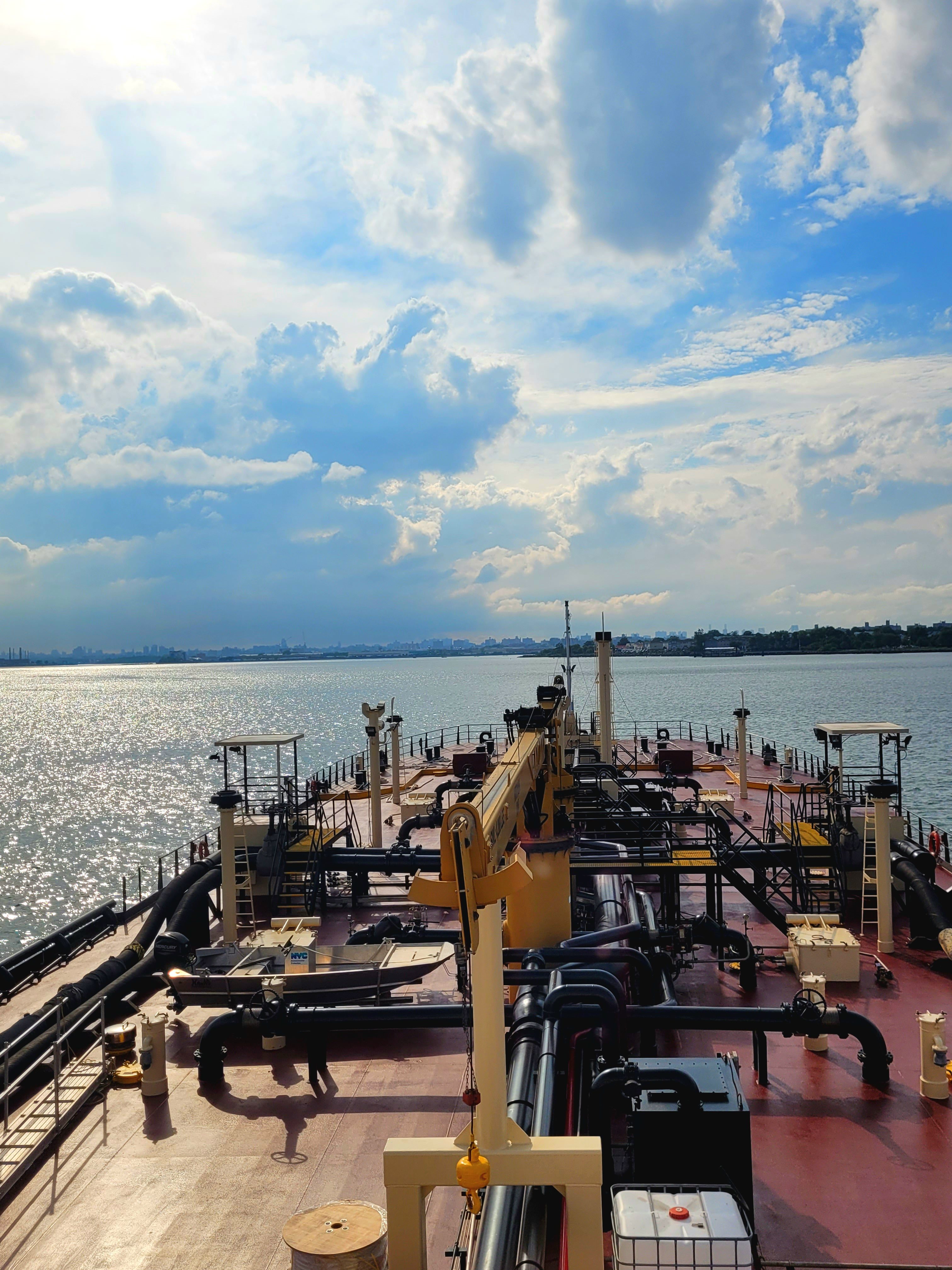
After each approximately three-hour sailing trip, mariners coordinate with dock workers to move two-foot-wide cargo hoses in place, filling and emptying the sludge boats up to five times a day. After the mariners and dock workers tie off the boat at the dock, the mate uses a crane on the ship to maneuver the hoses into place, and the mariners balance the flow of sludge using pumps and years of experience so the entire production runs smoothly. Below deck, engineers monitor engines and generators along with any issues that arise from the equipment. Once the process is complete, the mate returns to the bridge to assist the captain with disembarking, and the boat sets off for its delivery and refilling.
There are days when the weather makes sailing difficult due to wind, precipitation, or low visibility, so crews keep careful watch of the weather forecast. On days when the weather is clear, the marine workers are rewarded with immaculate views of the New York Harbor, Ward’s Island, Jamaica Bay, and Passaic Valley in New Jersey.
“I’ve seen dolphins in the Bronx this year,” Gagliano said. ”I’ve seen whales just south of the Verrazano Bridge, which is amazing to see so close to home, so close to shore. We pass the City every day, past the Statue of Liberty, and we see giant cruise ships and giant container ships. It’s really cool.”
Gagliano also serves as a member of the Local 2906 executive board, where he assists President John Hennessy with record keeping and new employee orientation.
“It’s very important for younger workers to become part of their union so seasoned members can pass down their knowledge and information,” Gagliano said. “I think that’s why I was asked to join the executive board, to help inspire newer people to become more involved.”