

More Than Meets the Eye at Materials for the Arts
Story and Photo by ACACIA RODRIGUEZ
In Long Island City, Queens, a warehouse holds 25,000 square feet of recycled items looking for a second life, including thousands of empty lipstick tubes, meters of vertical blinds, disassembled chandelier crystals, and discarded office supplies. Materials for the Arts (MFTA), a program run by the NYC Department of Cultural Affairs, was founded in 1978 to collect, store, and offer any of its donated materials for free to City agencies, public schools, nonprofits, social justice organizations, artists, and educators.
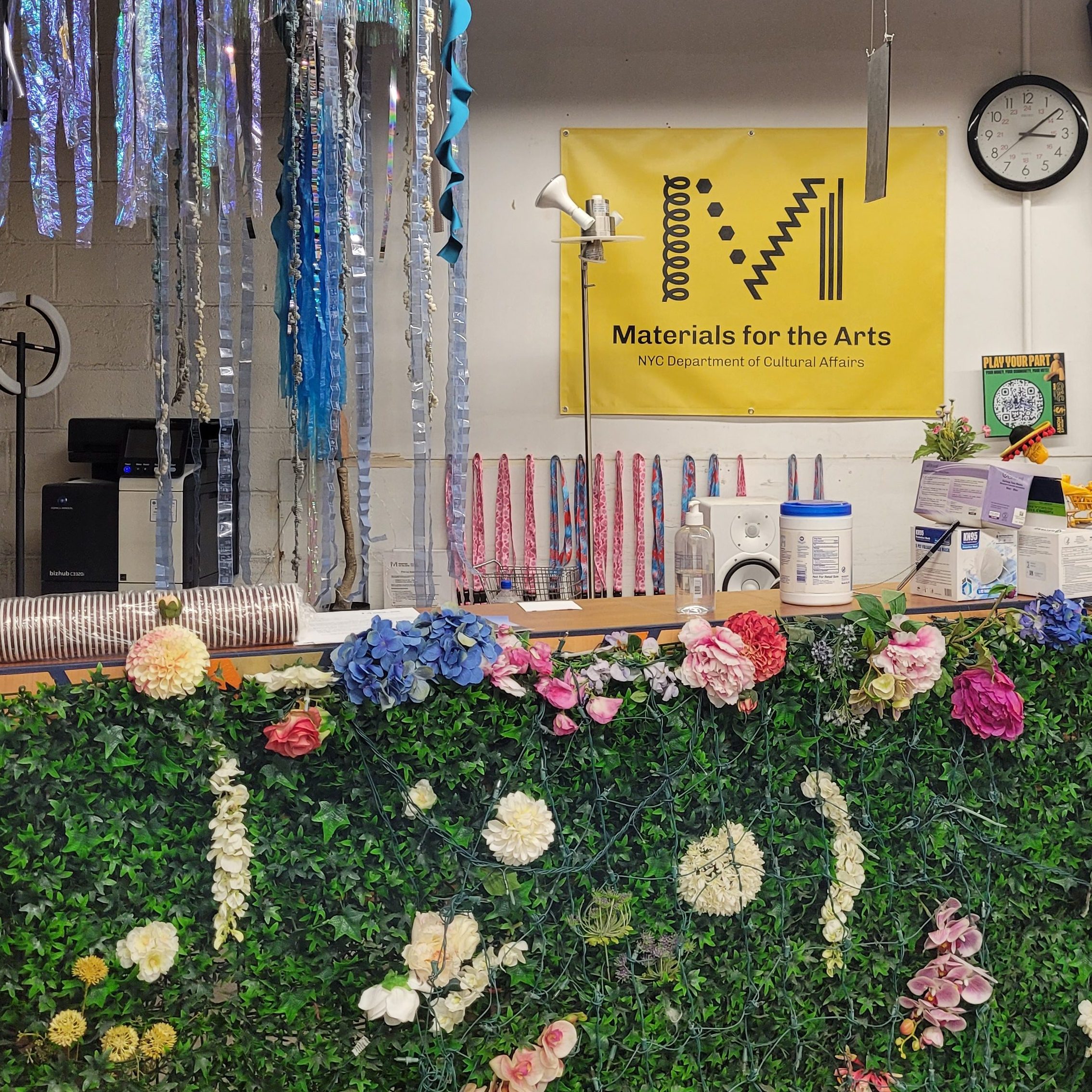
“If you need materials for the programming you do in your job, we offer free materials as long as they’re being used in the capacity of the agency you work for,” Education Coordinator and Local 371 Delegate Will Niedman said. “Whether you work in Parks and are doing a tabling program, you work for ACS and need clothes in a shelter, or you work for NYCHA and you’re doing a community event, you can come here and access our materials for free.”
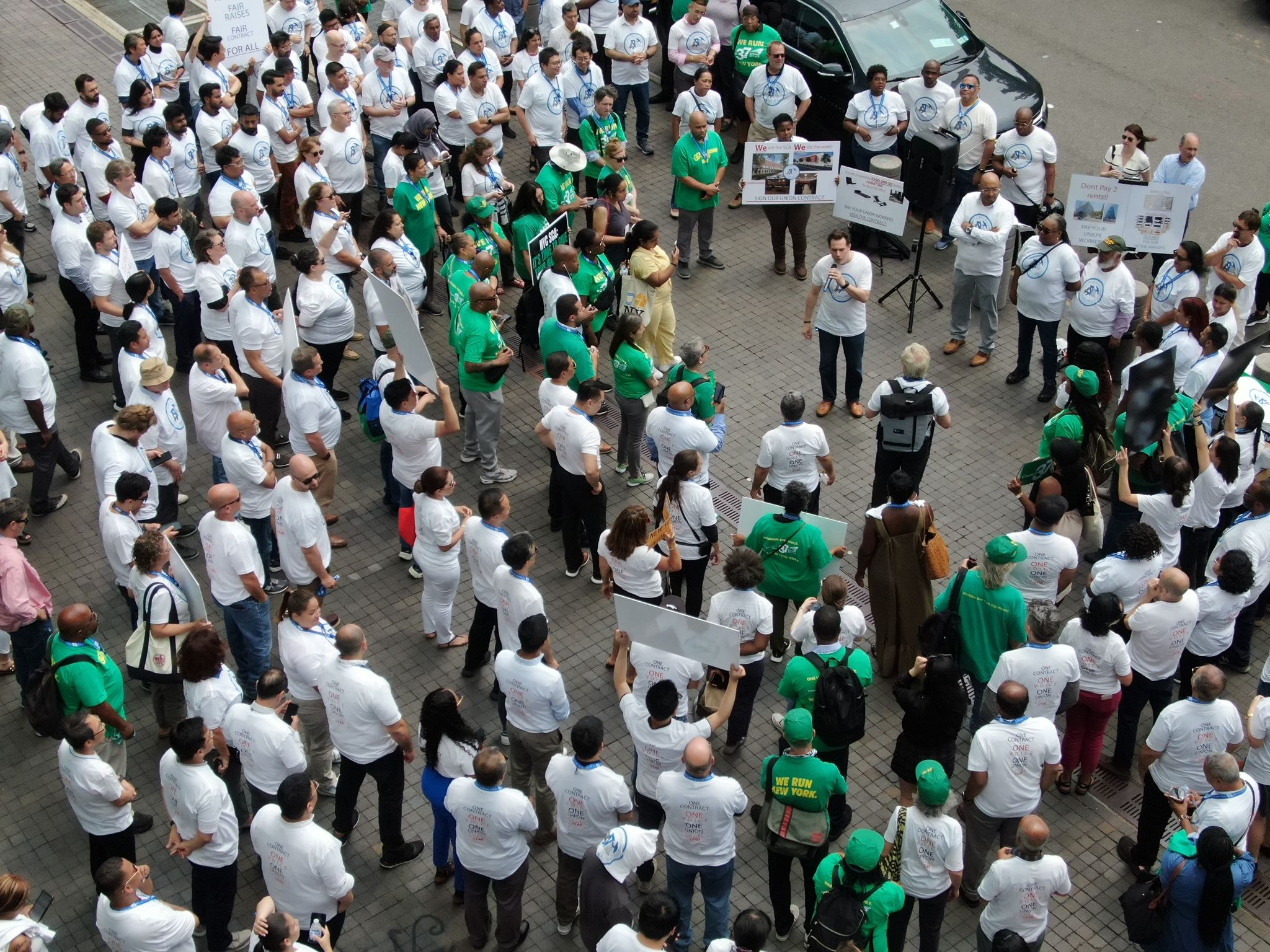
Members of Social Service Employees Union Local 371 operate MFTA, which offers two dedicated shopping days a week for any registered recipient to make an appointment and shop the warehouse.
As an Education Coordinator, Niedman works to curate programming for City schools.
“Educators can come in for professional development courses to learn more about creative reuse and incorporate art into their teaching practice. We also bring students here twice a day for a tour of our warehouse to learn about the waste stream in the city, see our artists-in-residence studio and gallery, and then create their own artwork from our materials.”
Warehouse Associates Chris Trainor and Andres Velez-Sierra and Warehouse Assistant Jose Rosa receive all the donations streaming into MFTA three days a week. The warehouse team weighs, logs in, and presorts carts full of random items into categories volunteers place in the tightly packed aisles.
“We are the only program that serves every City agency, from Parks, Sanitation, teachers, FDNY, and NYPD, to the athletic league, consumer affairs, and even the Correction department, providing books for their library,” Velez-Sierra said.
A unique set of items members won’t always find in the warehouse but are circulated by MFTA are direct donation lots from film, theatre, and TV crews. By reviewing the NYC filming production schedules and doing outreach to collect more donations, MFTA saves these items from landfills and sample sales. Many production assistants are aware of MFTA’s mission and contact the organization directly.
“By doing outreach on a more personal level and making connections with production teams, word spreads quickly about us,” said Alex Barbayianis, Media & Entertainment Logistics Coordinator. “Hot items for the members move very fast! Even what a production team thinks is a bunch of junk is some creative’s treasure.”
MFTA also serves community organizations by distributing items to those in need. Community Liaison Maria Canela transferred to MFTA from Make the Road, where she was focused on organizing with workers, families in housing, immigrants, and people in shelters. If there are clothes, shoes, luggage, toys, furniture, sheets, or household items in a donation, she’ll coordinate with Family Services to shop on location.
“Working here, I have the freedom to connect people with different resources. We are more than just a place that offers materials,” Canela said. “This is something we are creating day by day. We didn’t know we would have the ability to provide this kind of help when we started.“
By networking with intra-collaborative City agencies like Project Open Arms or Queens Museum, Canela can coordinate whole truckloads of clothing for people to shop through. This endeavor was supported by Executive Director Tara Sansone who gives the credit to her responsive team and caring volunteers.
“There’s so much waste in the film industry, and our staff took this initiative and hit the ground running,” Sansone said. “These are people who care, and some have worked here for decades, so they really know how to be effective.”
As MFTA receives more high-value items like clothing, computers, or furniture, it becomes more necessary to get connected with social service organizations and people who provide more human services. Daniel Larkin, Direct Donations Coordinator, will periodically send out an email blast listing items for members to reserve and pick up.
“We’re only as strong as our data. We keep reminding people we exist, and to come visit our warehouse,” he said.
There are levels to recycling, reusing, and rethinking how donated materials can impact the local community. MFTA staff divert items from landfills and offer them new life, aligning resource distribution with an environmental mission.