

The Journey of a Drop of Water: Data-Driven Decision-Makers Deliver Quality Water
By ACACIA RODRIGUEZ, Photo by TIFFANY CAREY
Before water from New York’s reservoirs flow through aqueducts, tunnels, and pipes connected to the city into kitchen sinks, showers, and drinking fountains, a team of researchers, chemists, and data scientists ensure the water is clean and safe to use. With 9.5 million+ customers relying on the fruits of their labor, members of Local 3599 Department of Environmental Protection (DEP) compose just the right water recipe using data they collect from New York’s reservoirs.
Dispersed throughout the upstate watershed, Local 3599’s technical and professional members play an essential part in sending one billion gallons of high-quality drinking water daily to the city and its outlying districts. The DEP ensures the scientifically defensible data collected meets the requirements set by the state and federal government. In order for water in the system to become drinkable, experts must know as much as possible about what is in it.
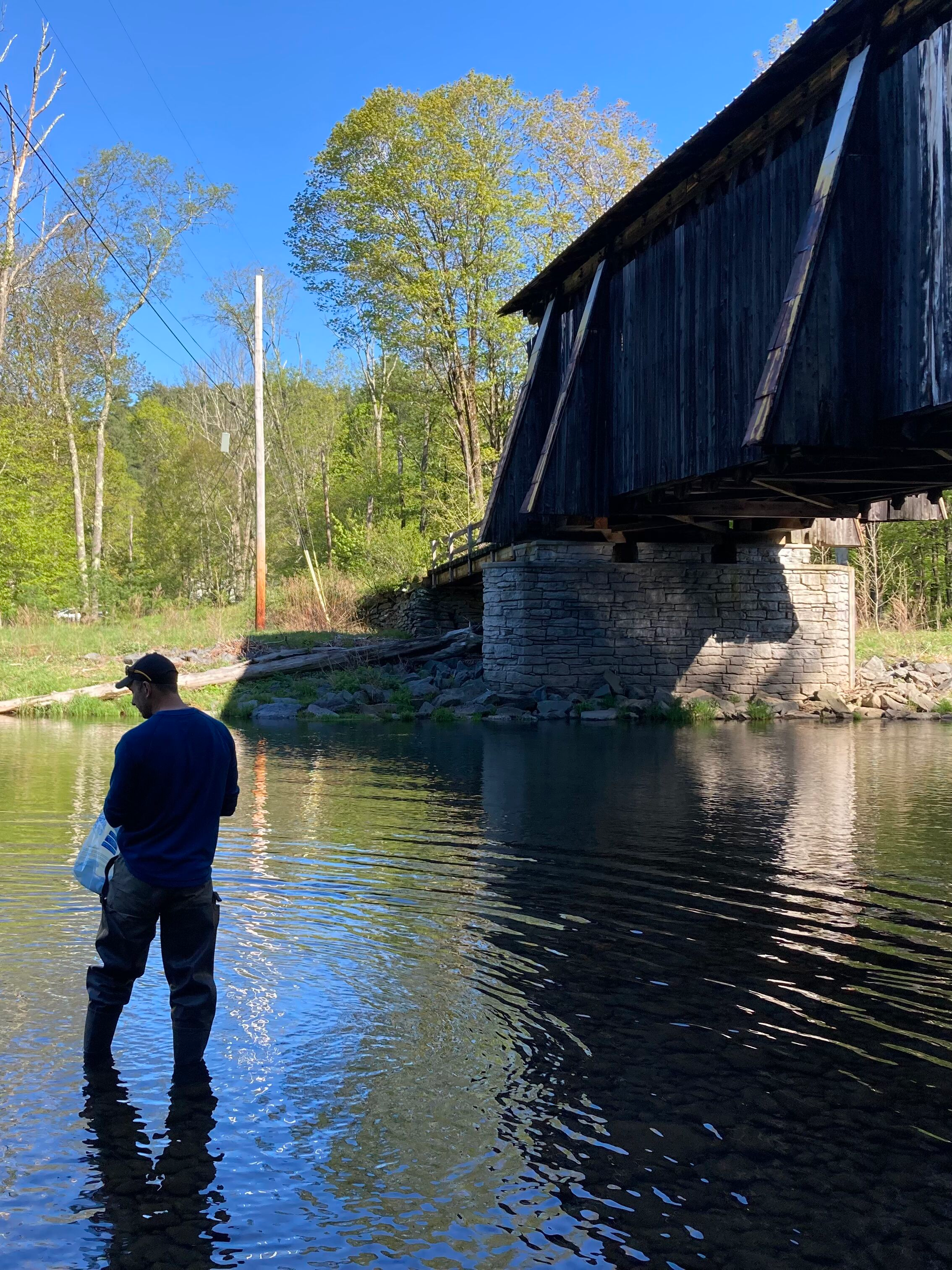
Dave Van Valkenburg, Data Scientist and Modeler, compiles and analyzes data collected by field scientists who bring samples of water from all over the watershed to laboratories for testing. The field scientist’s readings, done manually and robotically repeatedly throughout the hour, provide essential information for monitoring algae, carbon levels, temperatures, and sediment from storms. The data is used to construct a history of the sampled water.
“One of our primary goals is to take what is collected and turn it into actionable data,” he said. “We use a combination of laboratory results and in-field sensors to get an idea of how the water quality changes over time in response to storm events or droughts.”
The work generated by data scientists and modelers like Van Valkenburg supports future decisions about the water supply. Field scientists take hundreds of daily readings. The data is then logged, checked against acceptable ranges, and approved by a lab director. Data scientists use that information to predict how changes in the flow of water can improve its quality.
Predicting the future for a water supply facing various environmental factors requires absolute certainty in the data collected at the water source. At specific data points throughout the aqueducts, field scientists capture samples to be tested in laboratories. Quality assurance officers confirm that the data collection methods adhere to well-researched standards.
“We want to have total confidence in every single data point we take,” said Tiffany J. Carey, Associate Chemist II and Quality Assurance Officer. “At times, I’m out on the boat or in the stream with the field scientists. I’m watching, observing, and making sure the hands-on procedure meets government standards, are thoroughly documented, and help maintain New York State accreditation.”
In addition to audits that support data quality, procedures within each facility are also heavily monitored. Michelle Rissolo, City Research Scientist III, works as a Quality Assurance Auditor to support water treatment operators and supervisors who control the flow of water from different reservoirs and aqueducts into the city.
“When you see the office title ‘Auditor,’ the first thing you think is someone going in and telling people they’re doing things wrong — it’s not that at all,” she said. “They contact me to develop standard operating procedures for treating drinking water as supported by up-to-date research and regulations. After the procedure is built into the workflow, I return to review and make sure the new procedure adheres to guidelines set forth by the state and federal government.”
Rissolo gives credit to each expert on staff who contributes to treating the water so it is drinkable. Every drop, sample, test, audit, and review helps deliver one billion gallons of clean, high-quality drinking water to New York City residents and visitors every day.