


The Signs are Clear: Local 1455 Keeps Streets Safe at DOT Sign Shop
Story & Photo by JUSTINA RAMLAKHAN
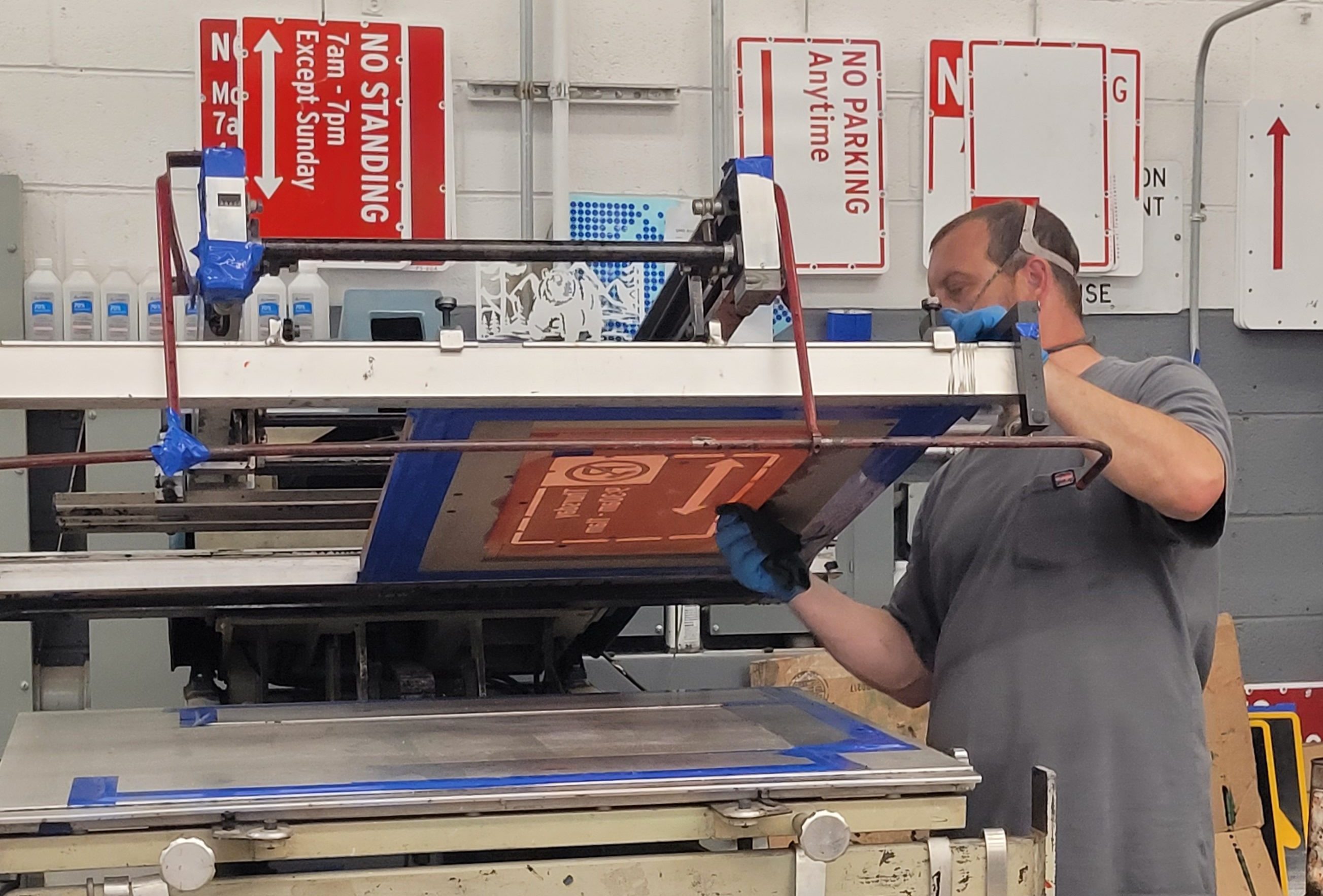
For the 4.4 million drivers that pass through New York City every day, traffic signs are a critical tool to maintain street safety for vehicles, passengers, and pedestrians alike.
Every street and highway traffic sign in New York City — more than one million citywide — begin as a huge sheet of aluminum cut by Traffic Device Maintainers represented by New York City Traffic Employees Local 1455. The signs are created at the Department of Transportation’s (DOT) Sign Shop in Maspeth, Queens, which produces more than 100,000 traffic signs each year, from the ordinary stop sign to special edition street signs.
“Our members may produce as many as 500 traffic signs a day to meet the needs of the city,” said Michael DeMarco, President of Local 1455. “We make, repair, install, and replace all street and highway signs in New York City.”
The dimensions of each sign are standard across the United States and must comply with the guidelines outlined by the Federal Highway Administration (FHWA). Once the sheet is cut to the appropriate shape and dimensions, the edges are rounded to ensure safety during handling. From here, Traffic Device Maintainers laminate the aluminum sheet with a reflective material that allows drivers to see the sign while driving at night. After lamination, the sign is ready for lettering.
Depending on the sign, letters or symbols can be added using a variety of methods, including screen printing, electric cutting, digital printing, and hand application. For bulk orders, silk screening is an efficient, cost-effective method of producing large quantities of the same sign style. The process involves flooding a stencil-like screen with vinyl paint to print the desired design directly onto the aluminum sheet.
Small-batch orders such as borough-specific regulation signs or street co-naming signs may use electric cutting, digital printing, or hand application to apply letters to the sign. All three techniques require applying a vinyl sticker to the laminated aluminum plate. Just as the FHWA sets guidelines for the sign’s shape and size, there are also guidelines for lettering. The standard font for traffic control devices is called Highway Gothic.
When signs are completed, they are ready to be secured to their designated post. Traffic Device Maintainers conduct routine visits every three days to assess the quality of road signs.
“Traffic signs are exposed to the elements,” said Nail Abusov, Traffic Device Maintainer. “They’re at risk of fading, being covered in pollution over time, or might be a casualty of a car crash. It’s our responsibility to ensure signs are visible, legible, and functioning.”
From initial creation to the scrap pile, every traffic sign in New York City begins and ends at the DOT Sign Shop. The Department of Transportation has a system to salvage and reuse as much of each sign as possible to increase sustainability. Because the base material of the sign is aluminum, traffic signs can be repaired, refurbished, and recycled.
New Yorkers may report damage to traffic signs in their neighborhood by calling 311.