


A Corpse Flower Blooms in Brooklyn
By ACACIA RODRIGUEZ
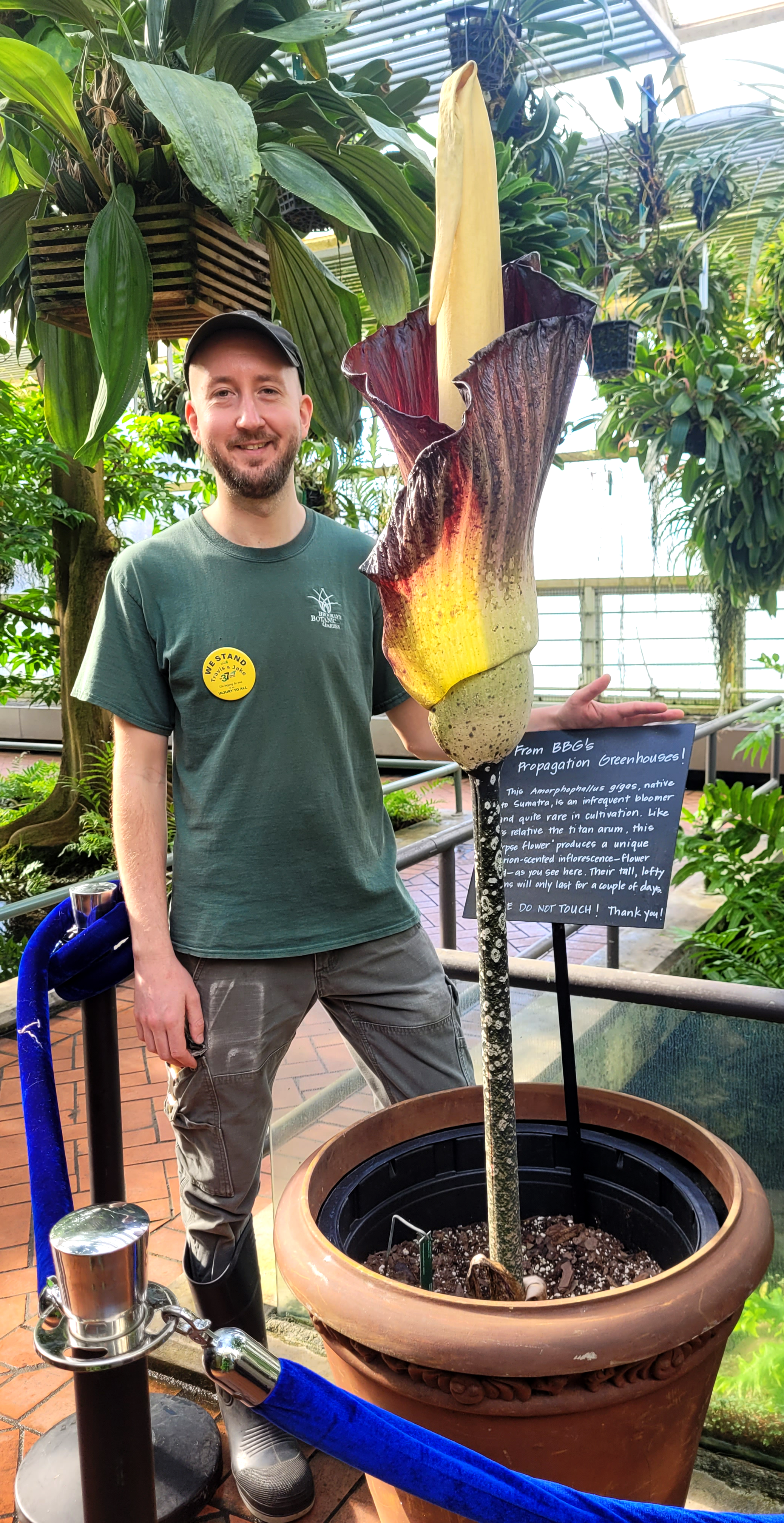
Local 374 Quasi Public Employees at Brooklyn Botanic Garden welcomed a fragrant new bloom to their steamy indoor garden on Jan. 24. Dubbed ‘Smelliot’ by denizens of the internet via Instagram, the Amorphophallus gigas — better known as a ‘corpse flower’ due to its distinctive scent — lured hundreds of visitors to the garden, people and insects alike.
Although the weekend was a flurry of long lines and nosey spectators, President Leonard Paul and members of Local 374 kept the crowds organized, informed, and moving quickly.
“When it first opened, the smell was kind of like dead rat, garlic, and burnt rubber,” Gardener Chris Sprindis said.
Proudly tended to by Sprindis and several union members in the humid Aquatic House in the Steinhardt Conservatory, Smelliot gave off waves of an acrid, fermented cheese scent, engineered to attract insects that aid the plant’s pollination. Unlike their cousin the peace lily, corpse flowers typically grow in a tropical environment, but Smelliot arrived at Brooklyn Botanical Garden as a tiny seedling expat.
“We acquired the plant in 2018 as a one- to two-year-old seedling from a nursery in Malaysia,” Sprindis said. “Normally its life cycle is such that it only produces a leaf, so in the four years I’ve been part of the team taking care of it, it’s just grown into one large leaf and then goes dormant.”
“When it first opened, the smell was kind of like dead rat, garlic, and burnt rubber.”
Smelliot was cultivated in the garden’s private propagation greenhouse before being transported to the public greenhouse during its bloom cycle.
Blooms from Amphophallus Gigas typically only last a few days. Among the pitcher flowers and ferns in the Aquatic Greenhouse, the duo posed for photos throughout the weekend, with Smelliot towering over Sprindis until its spathe (petal) and spadix (tall, yellow centerpiece) wilted.
Smelliot collapsed and re-entered its dormant stage on Monday, Jan. 27. It will not return for another several years, so curious gardeners and rare plant admirers will need to keep their eyes peeled and noses ready for the next stinky debut.