

A Labor of Love: Restoring the Brooklyn Bridge
By JUSTINA RAMLAKHAN
Once called “America’s Eiffel Tower,” the Brooklyn Bridge, which connects lower Manhattan to downtown Brooklyn, is a famous global landmark. At the time of its completion in 1883, the Brooklyn Bridge was the longest suspension bridge in the world. It was also briefly the tallest structure in North America.
An estimated 120,000 vehicles, 30,000 pedestrians, and 4,000 cyclists use the iconic, 140-year-old bridge each day. Generations of dirt, grime, and pollution distorted the bridge’s towers from their original gray color to the brown shade the bridge is known for.
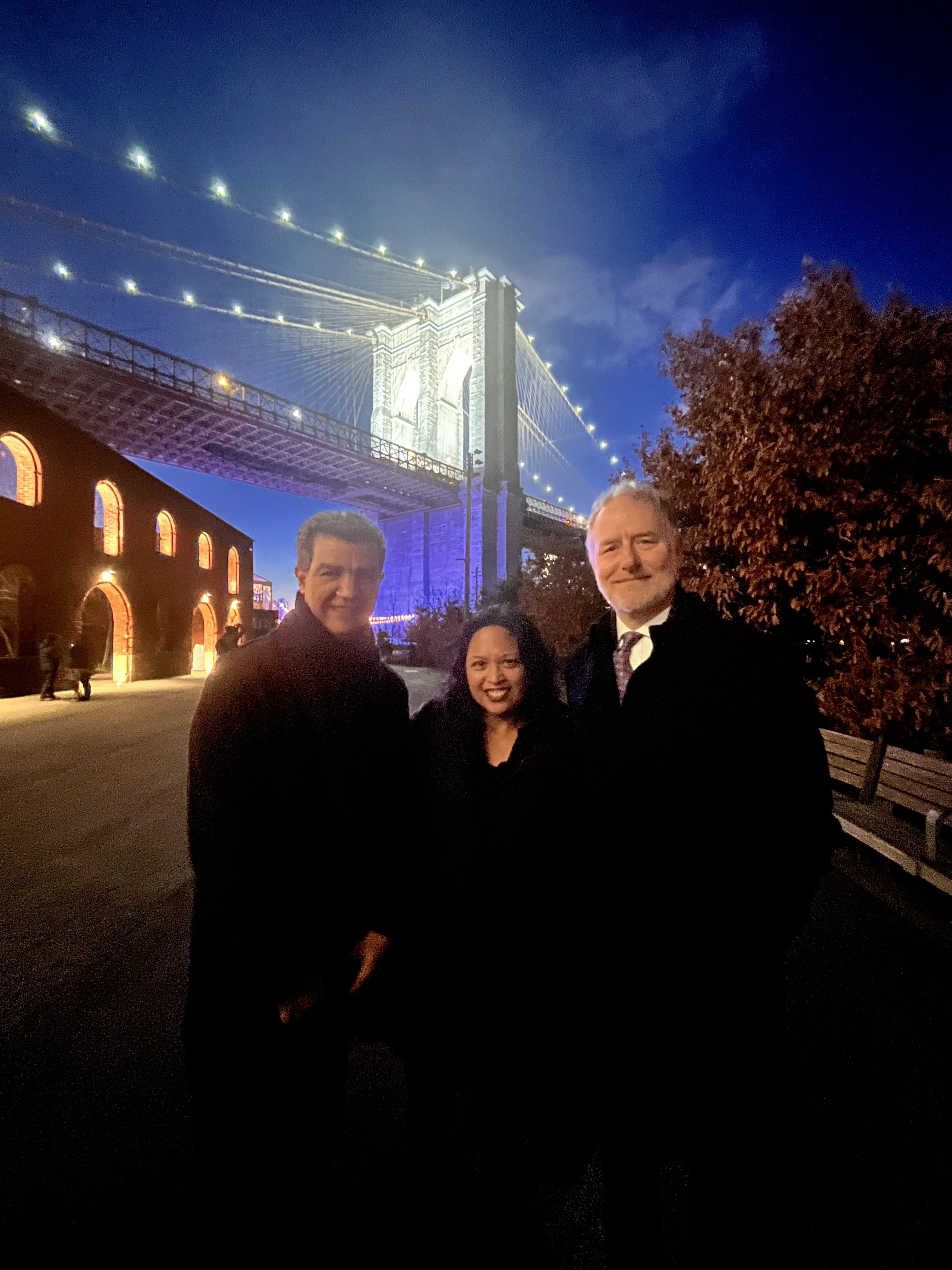
The bridge’s recent restoration by the Department of Transportation featured meticulous cleaning of every individual stone and brick, along with repointing and patching masonry. The project also included the installation of 56 new energy-efficient LED lights to illuminate the bridge’s distinctive towers.
The restoration took approximately four years and the cooperation of multiple city agencies. Like any work done on a historic site, the process began with an application to the Landmarks Preservation Commission (LPC) seeking approval to give the global landmark a makeover.
Caroline C. Pasion, Senior Landmark Preservationist and Chapter 41 member of the DC 37 Local 375 Civil Service Technical Guild, reviews applications for proposed work on buildings within historic districts and individual and scenic landmarks.
“The restoration work on the Brooklyn Bridge started as part of a larger scope of work,” Pasion said. “DOT originally came to us with a request to repair the masonry on the arches beneath the bridge, which were deteriorating and needed structural improvements to enhance the five lanes of vehicular traffic, pedestrian promenade, and protected bike path.”
The Commission Binding Report, a type of approval for work reviewed and approved by LPC commissioners at a public hearing, was issued for replacement of infill at the arches. The restorative component of the approval required numerous site visits to inspect brick replacement, granite samples, and other repairs.
The Brooklyn Bridge renovation featured:
- 175,000 feet of Interior brickwork
- 360,000 bricks installed on infill walls
- 650,000 feet of exterior granite work
Pasion and her supervisor visited the bridge during the pandemic to meet with DOT and the engineers, architects, preservation consultants, and conservation consultants who were working on the project.
“[The work] doesn’t end when you submit your application,” Pasion said. “DOT put a wonderful team together to get this project done. As a Brooklyn girl myself, I’m thrilled to have been able to ensure the work was completed as approved.”
DOT commemorated the new lighting system and restoration work on Jan. 11 with an evening ceremony that illuminated the Brooklyn Bridge’s famous towers and original light gray color.
“It’s important for anyone who lives here or comes here to understand that landmarks like the Brooklyn Bridge are historic cultural resources for all five boroughs of our city,” Pasion said. “My colleagues and I believe that preservation work is for everyone, the entire world, to appreciate and see and understand.”