

A Look at This Year’s Budget Proposals
Story and Photos by MIKE LEE
Against the backdrop of the dramatic ongoing changes in Washington, D.C., New York Gov. Kathy Hochul and New York City Mayor Eric Adams issued their initial executive budgets in January.
State of the State
In her State of the State address on Jan. 14, Hochul presented her vision for a stronger, safer New York with an array of proposals, from an emphasis on public safety to providing financial assistance for working families.
The proposals include:
- A $110 million Child Care Construction Fund to build new child care facilities and repair existing sites;
- $300 “inflation refunds” for taxpayers who make less than $150,000 per year;
- A proposed 5% reduction in taxes for those earning $323,000 or less;
- Universal school meals to ensure every student has access to free breakfast and lunch; and
- Opportunities for New Yorkers ages 25-55 to enroll at the State and City Universities of New York (SUNY, CUNY) and earn degrees for free in high-demand fields, such as nursing, engineering, teaching, and technology.
Although the state constitution requires the budget to be adopted by April 1, negotiations in recent years have delayed the process beyond the deadline.
State of the City
On Jan. 16, a week after his State of the City address, Mayor Adams released his preliminary budget for Fiscal Year 2026.
While Adams did not include any projected Program to Eliminate the Gap (PEG) cuts this year, the proposal could not take into account potentially devastating federal cuts to health, education, social services, and Infrastructure programs that may have adverse impacts on the city’s general fund.
The Mayor’s Preliminary Budget includes:
- Adding five additional organizations to the Cultural Institutions Group;
- $10 million in funding for housing and tenant protections;
- $100 million for Summer Rising school programs;
- $137 million for various homeless services initiatives;
- $4 million for traffic safety installations;
- $14 million for additional Parks programs and $5.5 million for swim programs; and
- Adding a second cleaning shift to 100 high traffic spots across 64 New York City parks.
By law, a balanced budget must be adopted by the City Council and signed by the mayor before midnight on June 30.
A Morning in Harlem
The consequences of every budget decision reverberate to the human level, whether on a public worker or the community they serve.
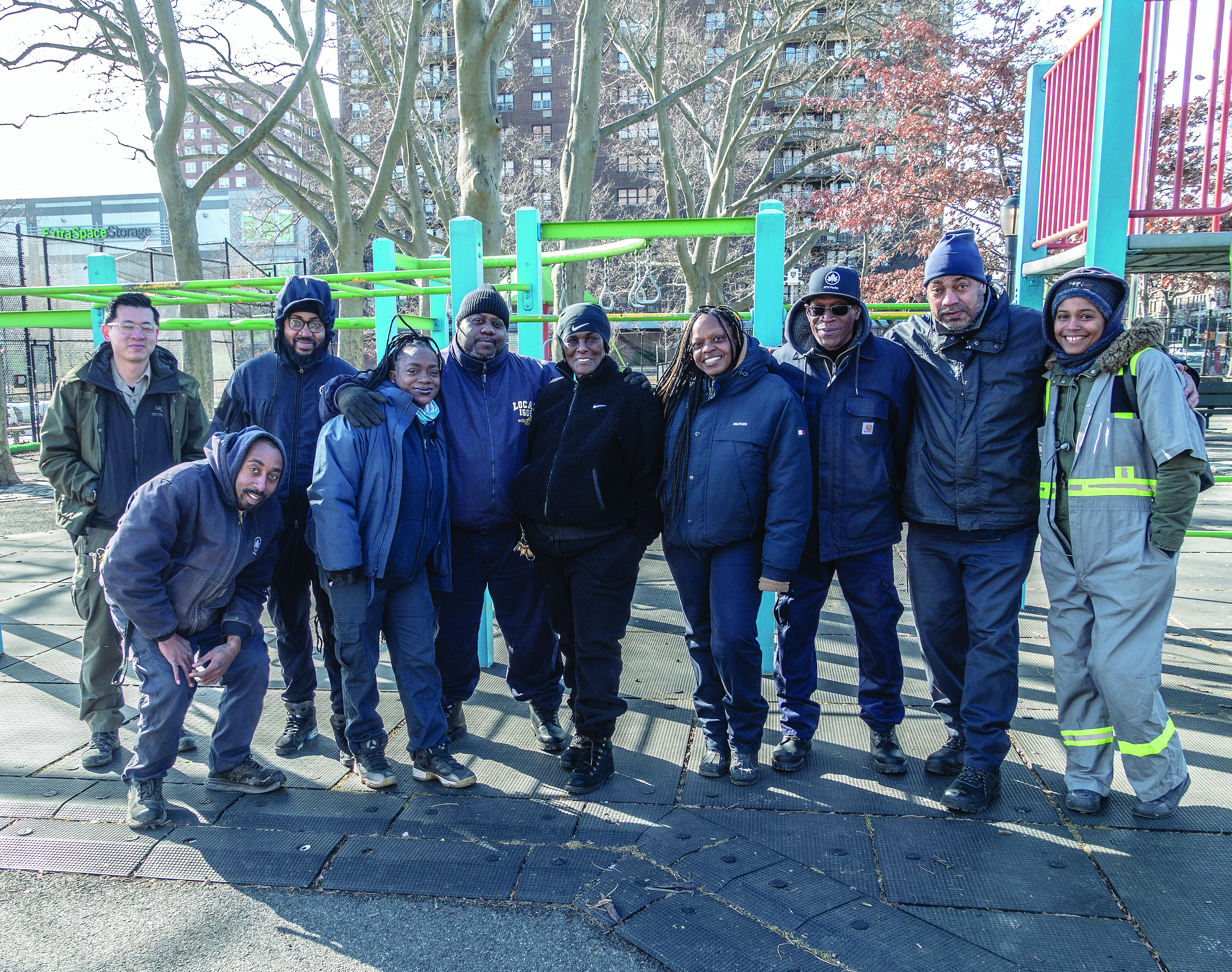
On a sunny but freezing February morning, members of NYC Attendants, Park Service Workers, City Park Workers & Debris Removers Local 1505 chipped ice from trees and cleared debris from play structures throughout Marcus Garvey Park in Harlem.
The workers took breaks to warm up before returning to perform their frigid duties, which included checking water chlorination levels, ground maintenance, cleaning restrooms, and performing safety checks of park facilities and vehicles.
The local’s members work for many city agencies, including the Department of Parks and Recreation, the Police Department, Administration for Children’s Services, Department for Aging, Department of Environmental Protection, and Department of Sanitation.
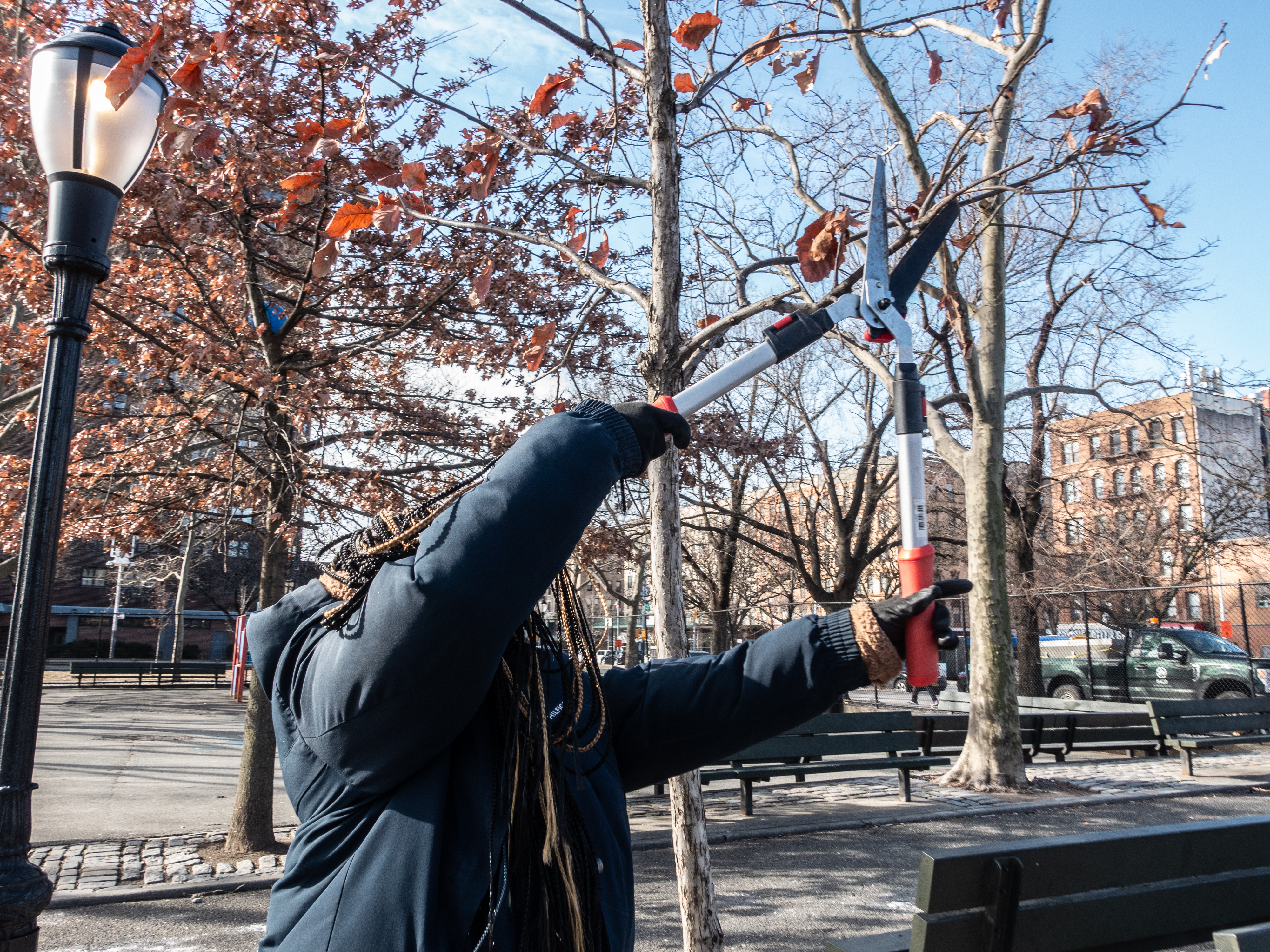
Mayor Adams’ proposed Fiscal Year 2026 investment builds on the 62 parks that received a second cleaning shift as part of last year’s budget. The added shifts will allow more families to enjoy safe, clean, and accessible parks across the five boroughs.
As the workers went about their tasks at Marcus Garvey, Local 1505 President Dilcy Benn emphasized the importance of advocating for funding during each stage of the budget cycle.
“I have to take care of my members,” she said. “We’ve been fighting for these job lines for years after struggling with a shortage of workers. Adding them now is critical because the parks will only get busier in the summertime.”