


DC 37 at Work: Health Care Justice
By JUSTINA RAMLAKHAN
New York spends more money per patient on medical care than anywhere else in the U.S. Rising health care and hospital prices are a burden on everyone, from individuals and families to businesses and government employers.
As the second-largest purchaser of private health insurance in New York State, the City of New York’s procurement decisions have a great impact on the health care market and the players within it. DC 37 and other public sector unions bear the responsibility of representing the interests of working people in those negotiations, including fighting for equitable and affordable health care for all.
“Unions are at the forefront of the social justice issues that affect not only our members but the majority of society,” said Henry Garrido, DC 37 executive director. “It’s important for us to fight for equity and inclusion, for access to quality care, and to not allow insurance companies to profiteer off the health and wellness of our members.”
DC 37 works to influence the health care industry through a number of methods to lower costs, eliminate price gouging, and create more equitable access for members and working families.
Fighting for What’s Right
At the Bargaining Table
When health care and prescription drug costs grow faster than the funding identified to pay for them, workers’ wage increases and other benefits are at risk of taking the hit in contract negotiations.
Every DC 37 member’s health insurance and coverage after retirement are negotiated at the bargaining table. For city workers, state workers, nonprofit workers, and their dependents, health care is negotiated between the union and the employer as part of their benefits package.
Lifesaving chemotherapy and self-injectable medications are negotiated separately to ensure no one is left without access to lifesaving medications because they cannot afford them. DC 37 uniquely covers retirees’ prescription drugs for life, a benefit not offered by any other New York City union.
Through Legislation
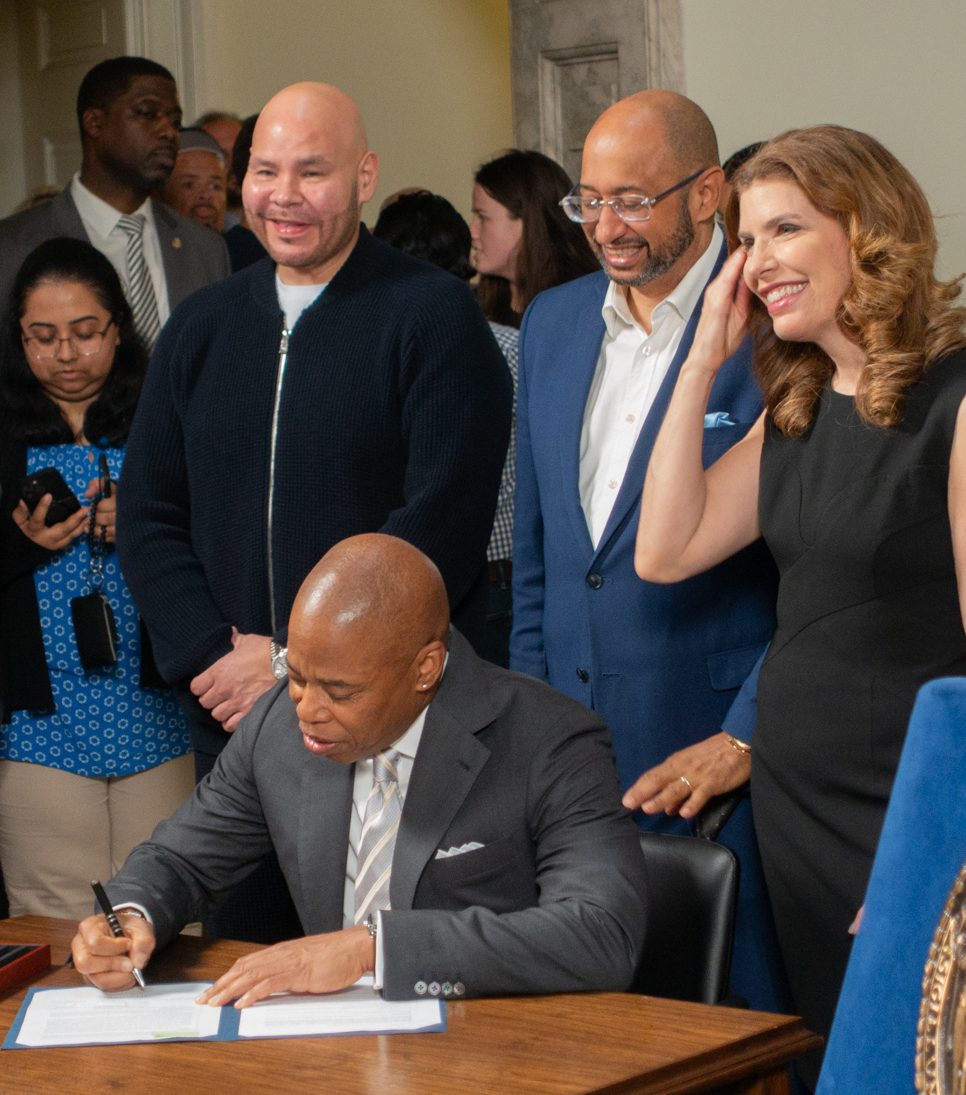
In 2023, DC 37 worked with City Council Member Julie Menin to pass the Healthcare Accountability and Consumer Protection Act, a bill developed to analyze hospital pricing and provide transparency for medical services. After unanimous approval from the City Council, Mayor Eric Adams signed Intro. 844-A into law on June 23, 2023, thereby establishing an Office of Healthcare Accountability (OHA), the first of its kind in the country. OHA is tasked with examining provider and hospital pricing practices to make it easier for New Yorkers to find how much their health care services cost.
At the state level, DC 37 supports the Fair Pricing Act. If passed, the bill (A.2140) would require routine medical services to cost the same regardless of where they are performed. This bill aims to limit the price of common procedures performed in doctors’ offices and clinics while ensuring routine outpatient services are not marked up as a result of hospital market power or consolidation. The proposed law would cap patient billing costs at 150% of Medicare rates. The Fair Pricing Act is currently moving through the state Senate and is supported by DC 37 and other unions.
In the Courtroom
DC 37 has been at the forefront of filing class action lawsuits against bad players in the health care industry.
“Pushing back against the entities that seek to make the largest profit possible for providing essential and life-saving drugs and health care has been a priority of DC 37 for many years,” said Audrey Browne, consultant to the DC 37 Benefits Fund Trust and administrator for the Local 389 Health & Welfare and Pension Funds.
Price gouging by pharmaceutical companies accounts for a large portion of the increase in prescription drug costs over the last decade. DC 37 recently joined the largest class action case to be brought against 59 generic drug manufacturers in the U.S.
The claims allege that generic drug manufacturers illegally conspired to artificially inflate the prices of certain drugs by coordinating price fixing, manipulating bids, and dividing the market shares among themselves. This type of scheme results in higher prices for consumers who rely on what are supposed to be the lower cost generic medications.
“To provide the quality services and care our members deserve, we need to hold Big Pharma, insurance companies and pharmacy benefit managers (PBMs) accountable,” Browne said. “These unfair practices divert hard-earned wages from members’ pockets to exploitative corporations.”