


Workwear: Get to Know the Uniforms and Gear of Fellow DC 37 Members
By ACACIA RODRIGUEZ

The Criminalists of Local 3778 New York City Police Department (NYPD) Technical Professional Employees are civilian forensic experts trained to perform scientific analyses of evidence involved in a crime. On any given day, the workers analyze anything from hair, fibers, and latent fingerprints to gunshot residue, explosives, and controlled substances.
The Personal Protective Equipment (PPE) these workers wear must protect them from hazard exposure while minimizing handling or contamination of evidence with DNA.
Controlled Substance Analysis Section Bulk Team
These Criminalists specialize in testing bulk liquid and powdered samples using various measuring instruments for testing.
CSAS Bulk Team Member (and Model) Benjamin Torres
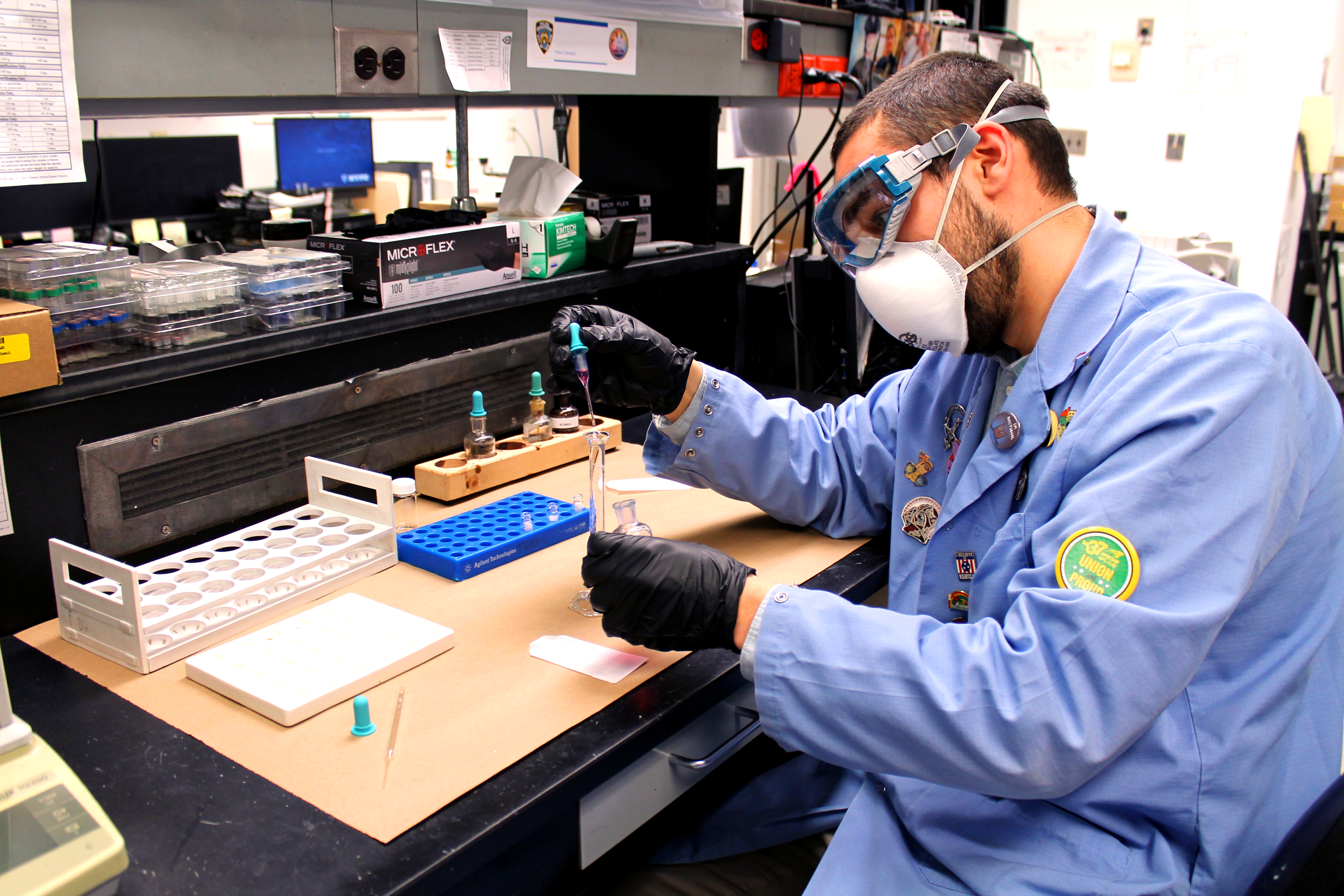
- Goggles, latex gloves, and N95 masks protect from fumes and errant particles.
- An antistatic lab coat base layer protects clothing from spills and stains while preventing particles from clinging to surfaces.
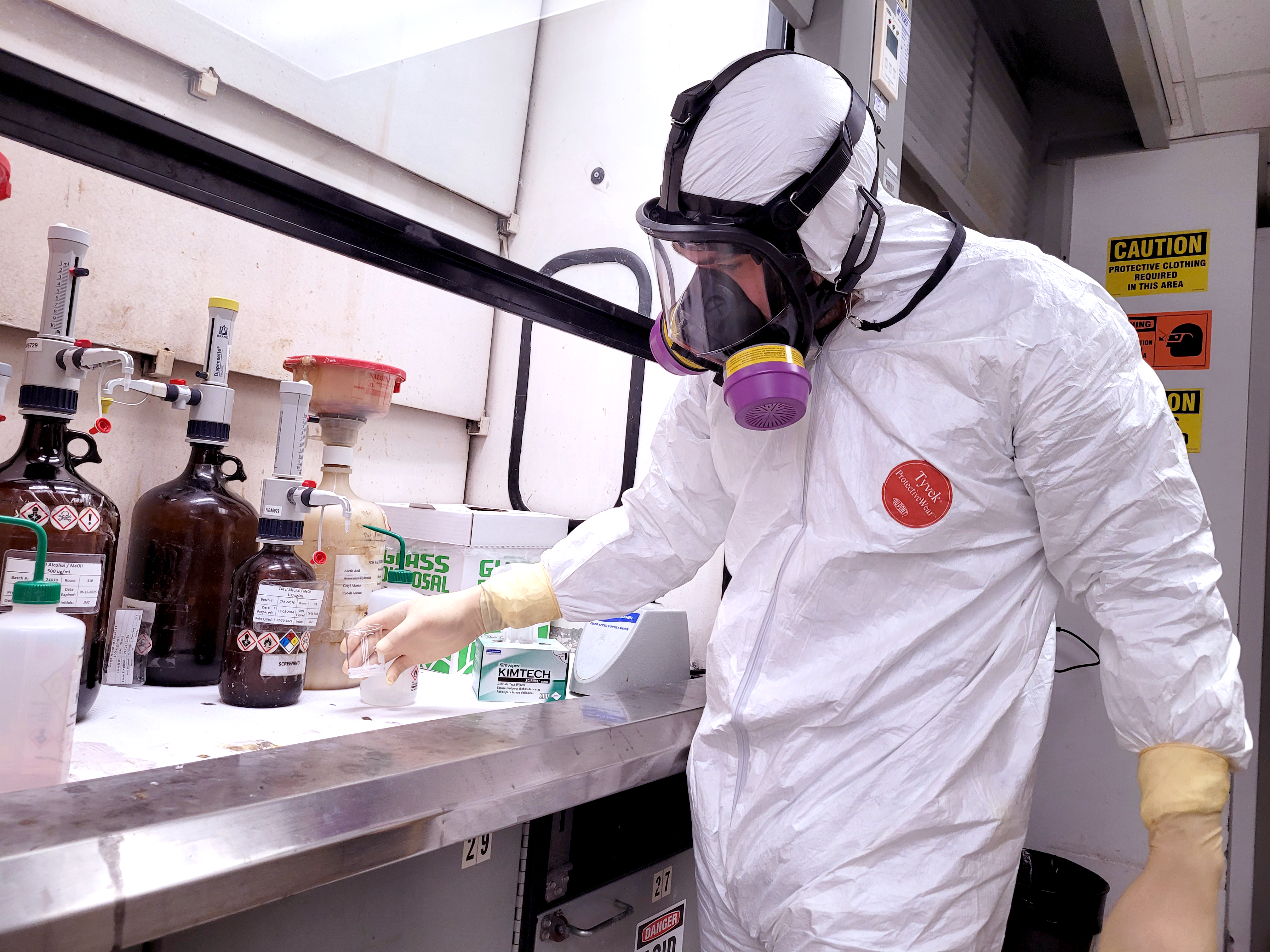
- A respirator and second pair of gloves worn over a waterproof hooded bodysuit with attached booties are necessary for bulk substances that must be broken up and weighed before testing.
Latent Print Development Unit
These Criminalists analyze full or partial fingerprints from evidence collected by detectives at crime scenes. The methods can range from dusting fingerprints using powder or coating the evidence with fluorescent dye stains.
LPU Team Member (and Model) Mikaela McGee
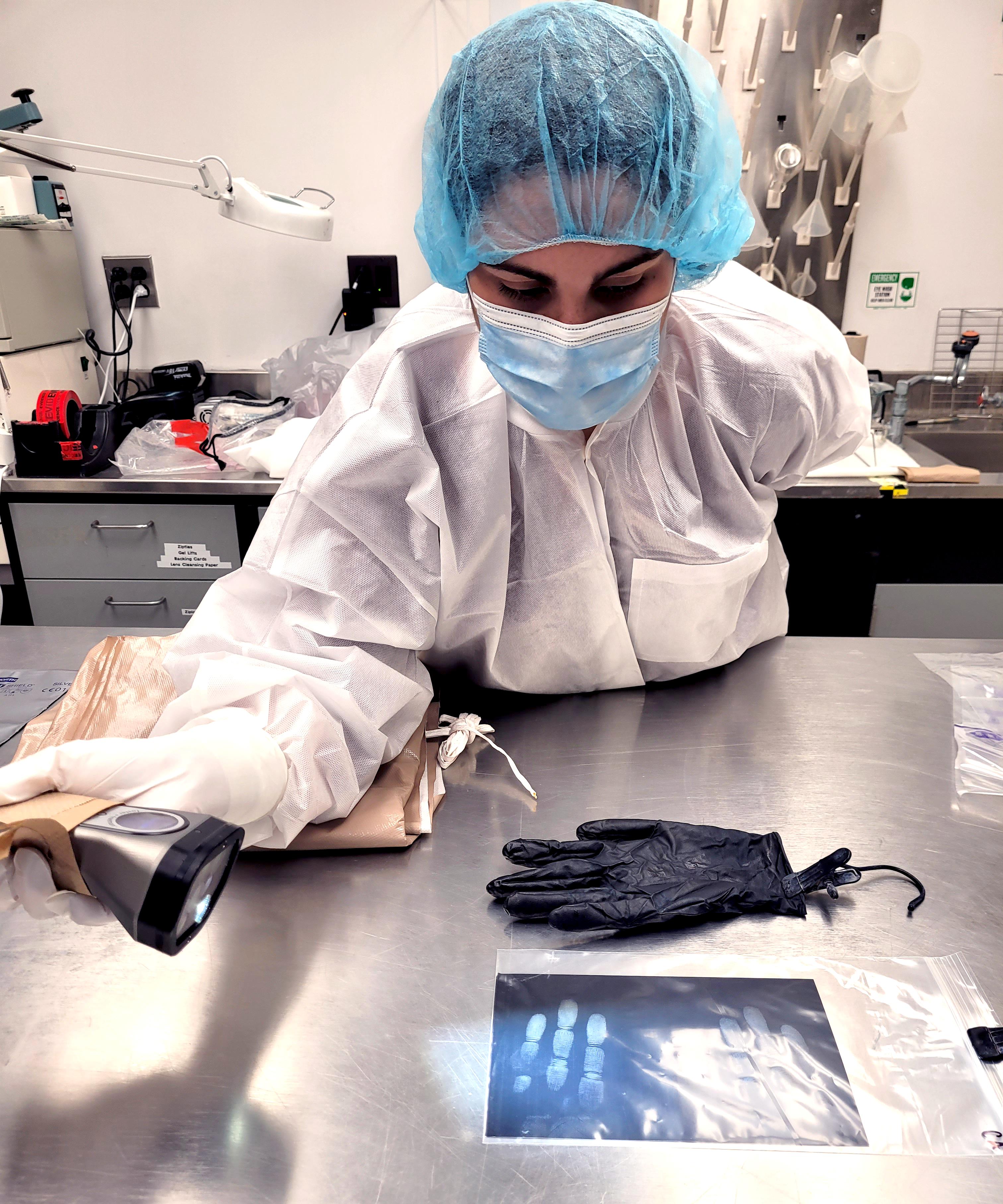
- Gloves, hairnets, masks, and fluid-resistant lab gowns are worn while examining evidence to maintain a sterile surface and prevent materials from coming into direct contact with skin or clothing.
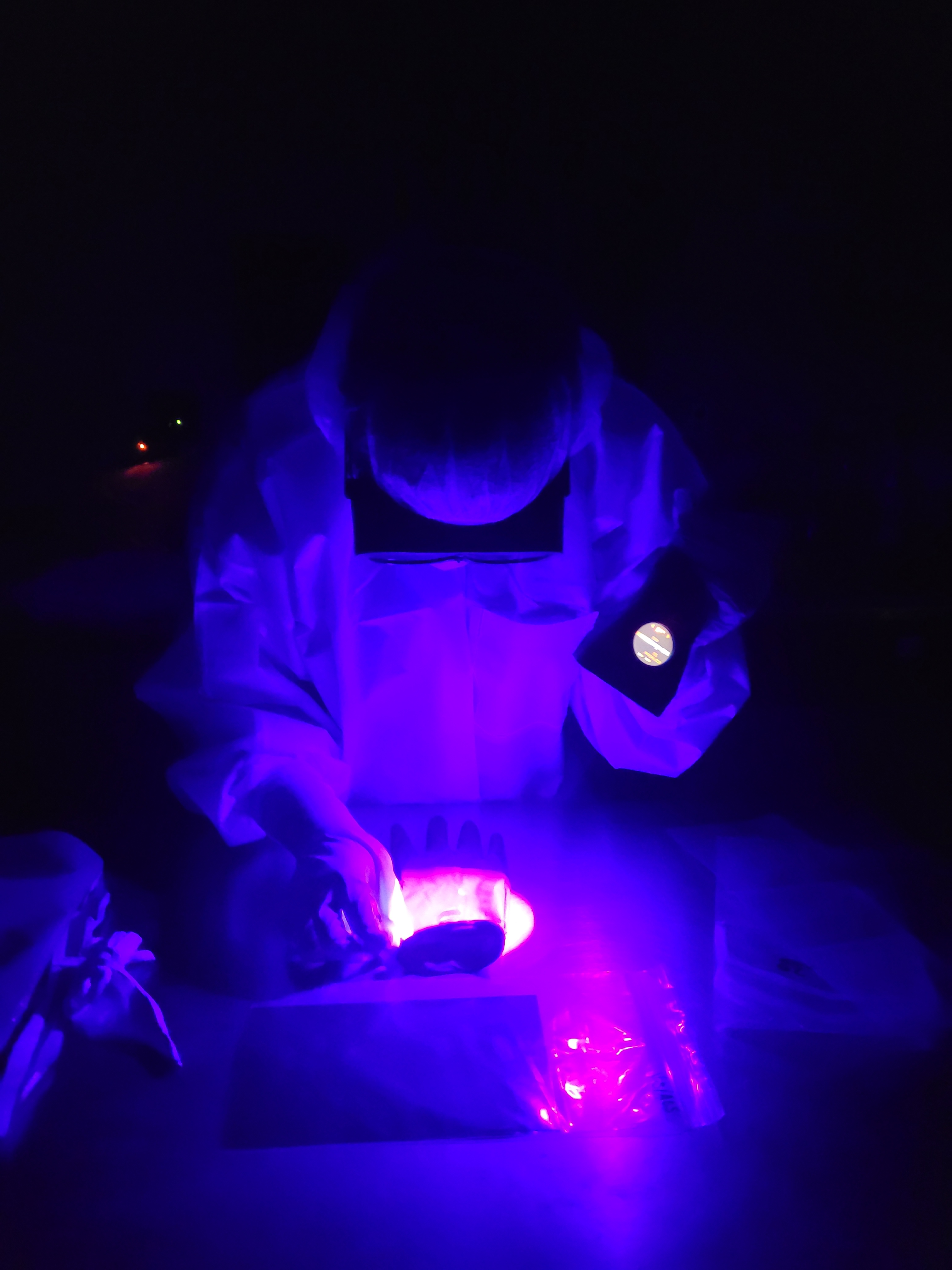
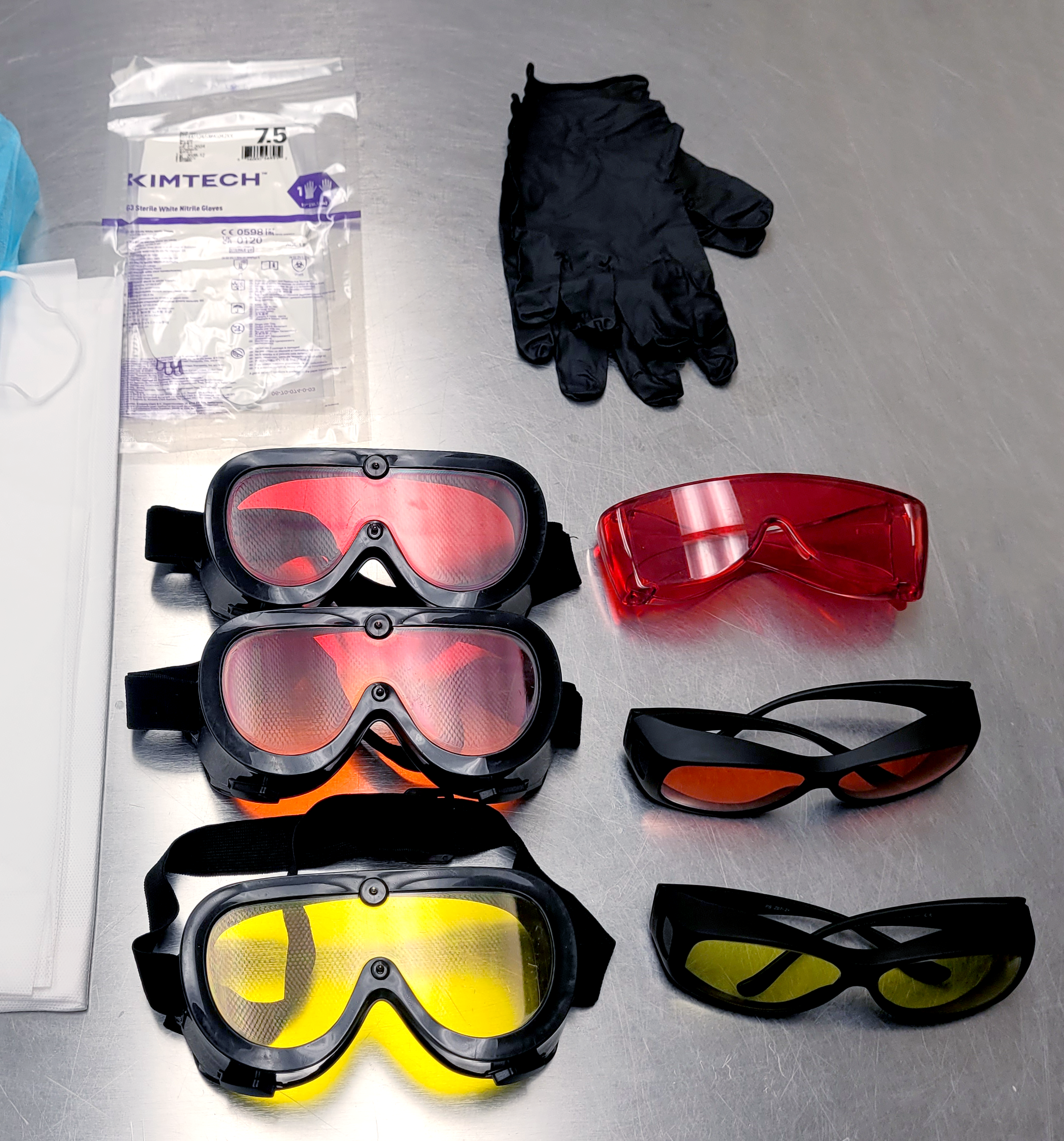
- A variety of safety goggles protect eyes from harmful UV light and chemicals.
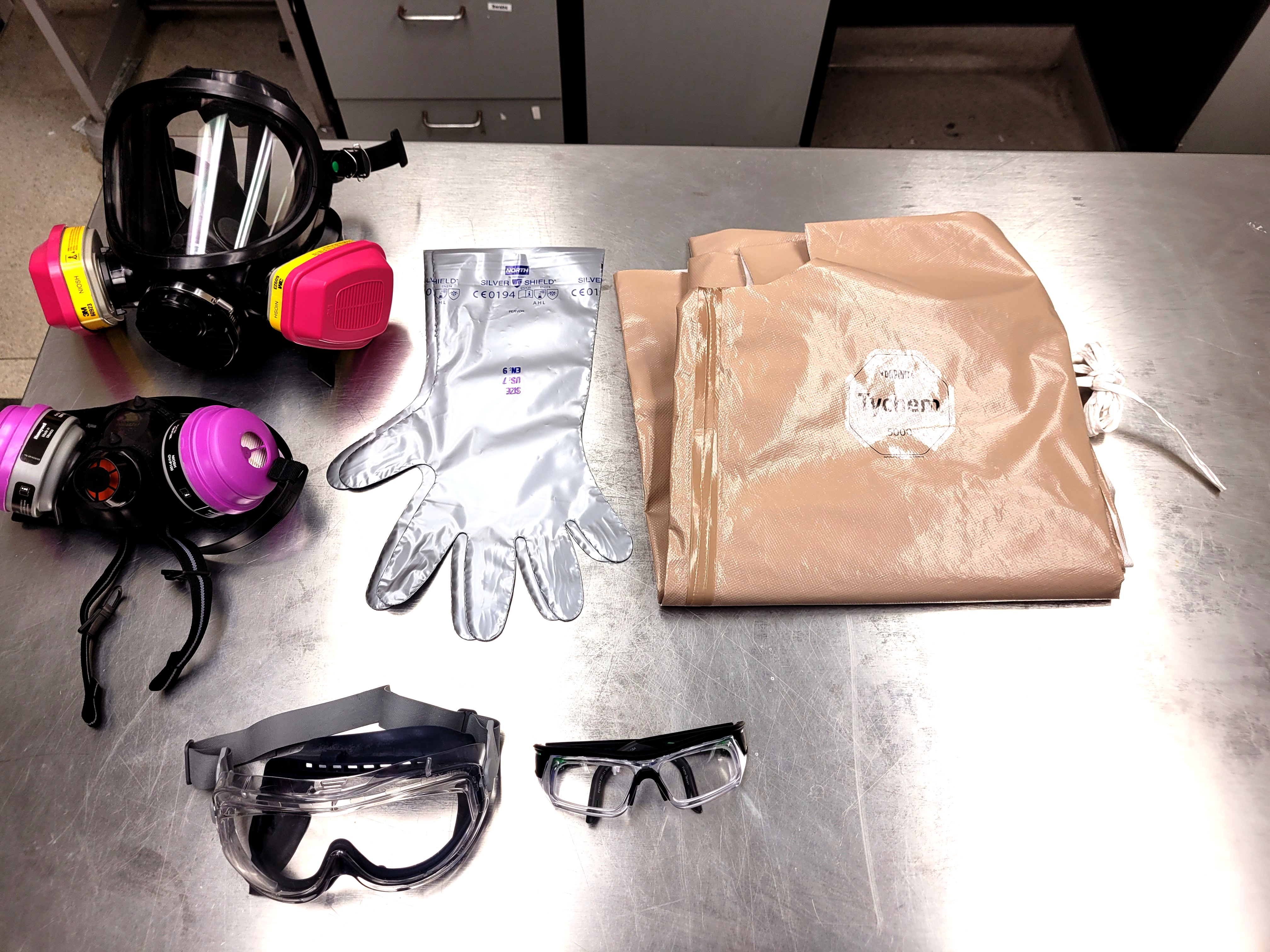
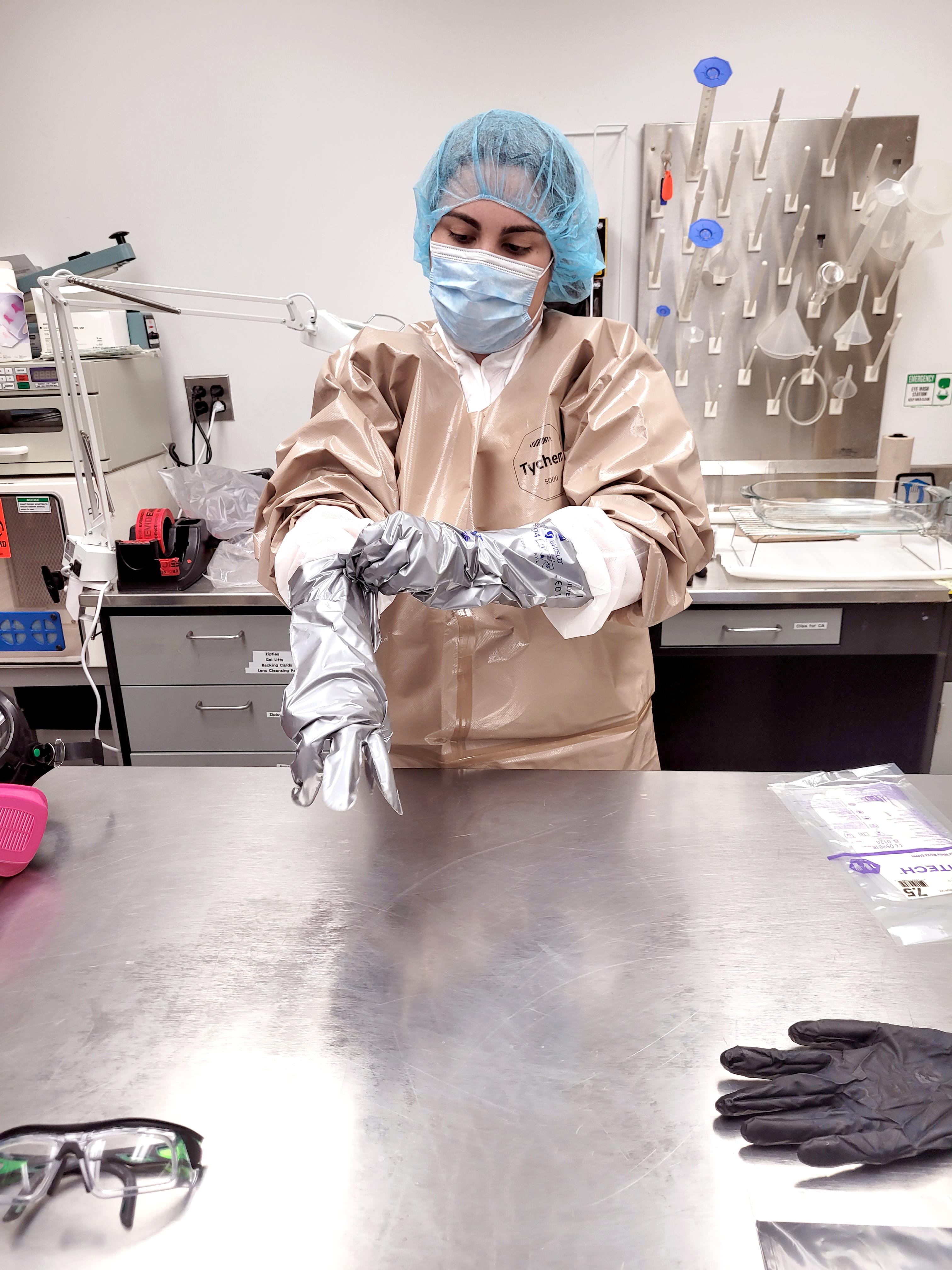
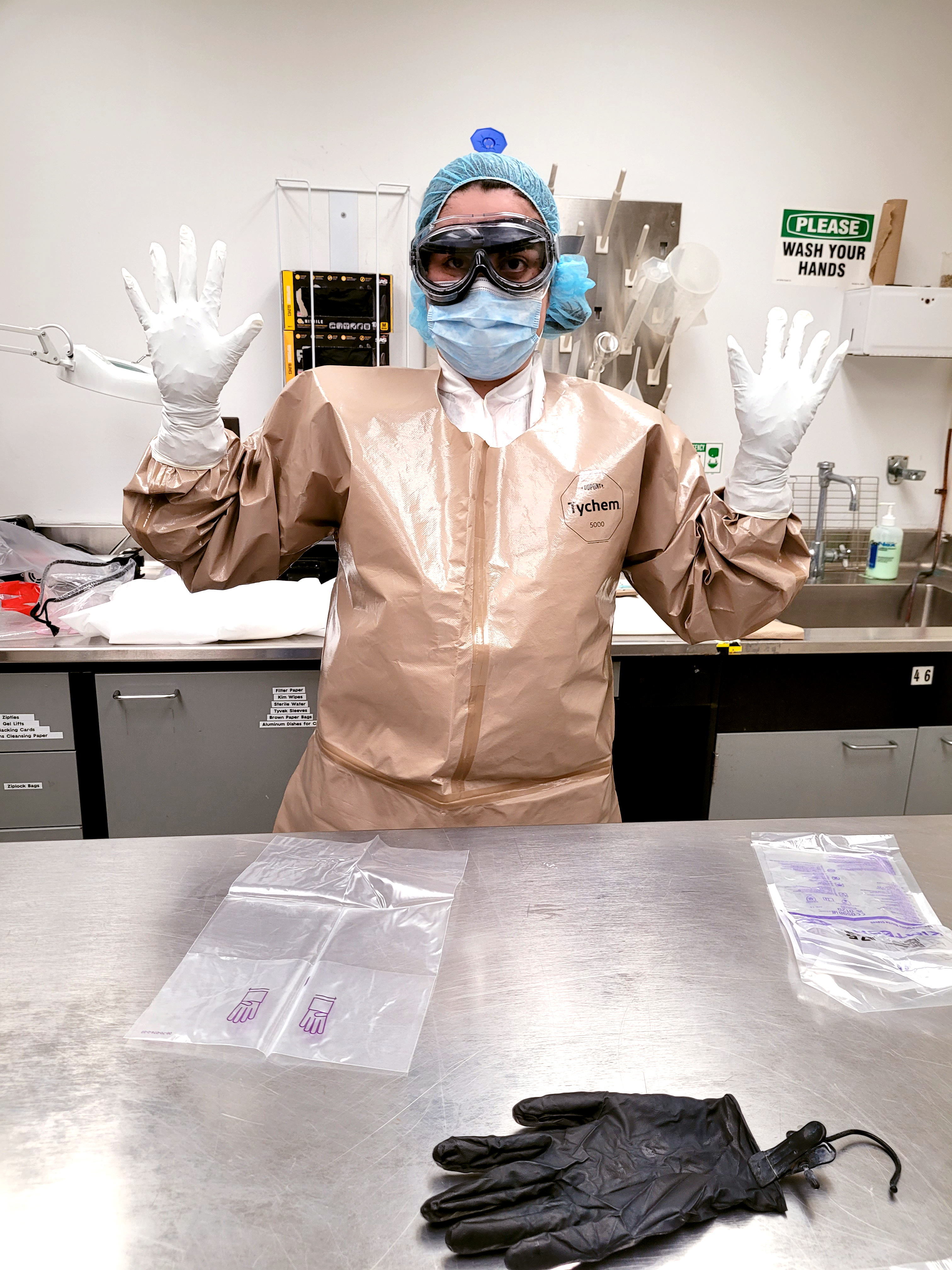
- For additional levels of protection against hazardous materials or blood-borne pathogens, a respirator and second set of chemical-resistant gloves can be added to a long-sleeve, splash-proof apron. Each layer is put on in a precise order to avoid cross-contamination of surfaces.