


Local 1559 Museum Specialists Buzz with Activity
Story & Photos By ACACIA RODRIGUEZ
Many know the American Museum of Natural History features a planetarium, live butterfly vivarium, fossils, and rare gems. What patrons may not be familiar with are the massive collections tended to by the Museum Specialists of Local 1559. Beyond where the public gathers, Museum Specialists are busy documenting, researching, and cataloging hundreds of specimens.
“Our collection is mammoth, and most of it is not on display to the public,” said Christine LeBeau, Museum Specialist and President of Local 1559 American Museum of Natural History. “Our collection has millions of specimens and functions as a lending library. We send material to scholars so they can study it and oftentimes compare it to other specimens to make identifications or identify new species.”
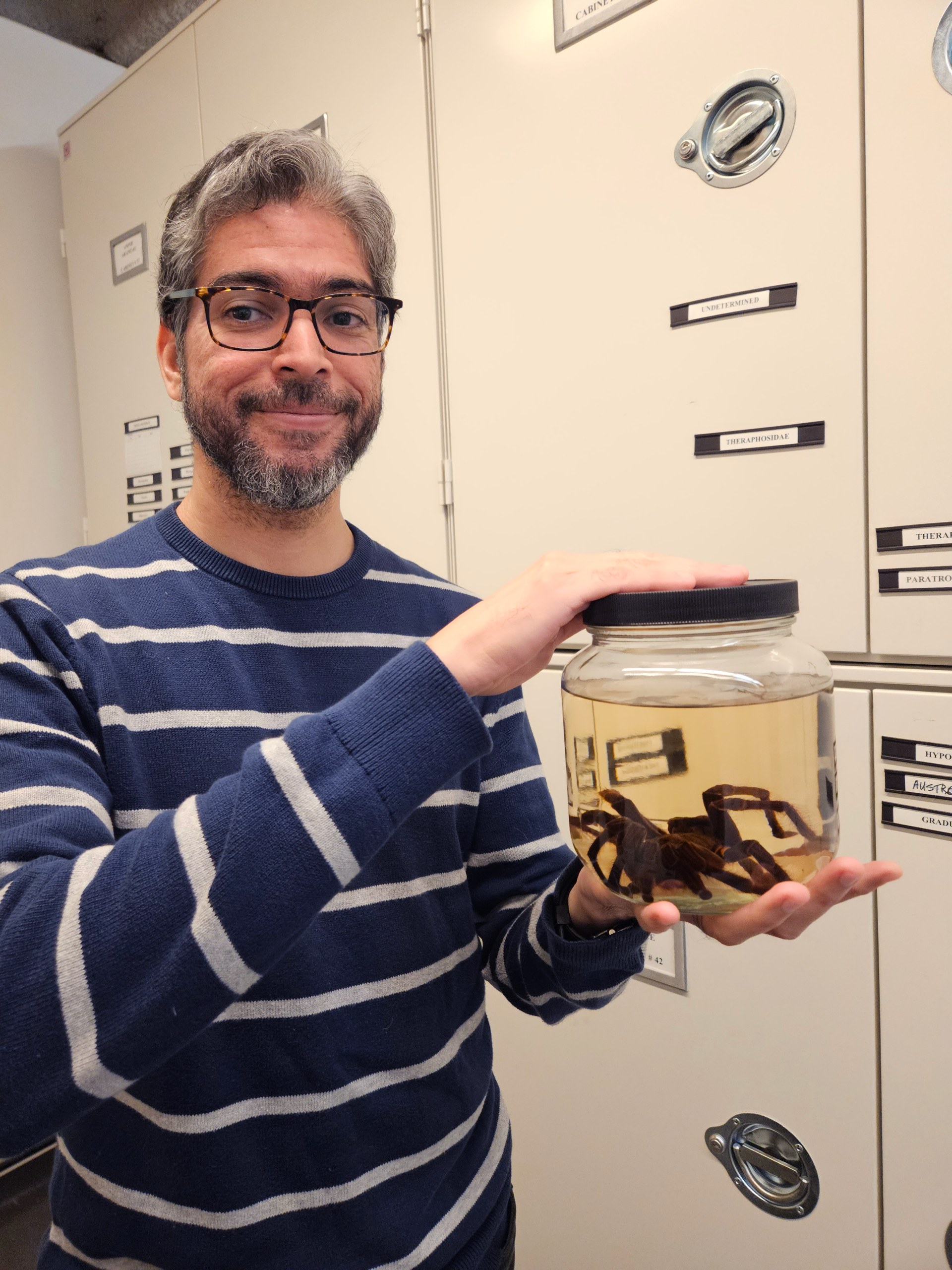
The specimens range from insects, nests, and arachnids to fossils, textiles, and archaeological objects. There are hundreds of years’ worth of specimens collected from all over the world. They come in crates, vials, and cases waiting to be preserved, identified, and filed into a database. The specimens are dried and stored in glass cases, submerged in ethanol to slow tissue decay, refrigerated, or cryogenically frozen, depending on their tissue composition.
While LeBeau works with the Hymenoptera order, which includes bees, wasps, and ants, Museum Specialist Corey Smith focuses on the Coleoptera order, which includes all types of beetles. A typical day for him could be spent logging specimens in or out to researchers along with their required shipping permits, photographing holotypes (a specimen designated as the representative for a species) for the reference database, or shifting the location of specimens based on new, up-to-date taxonomic research.
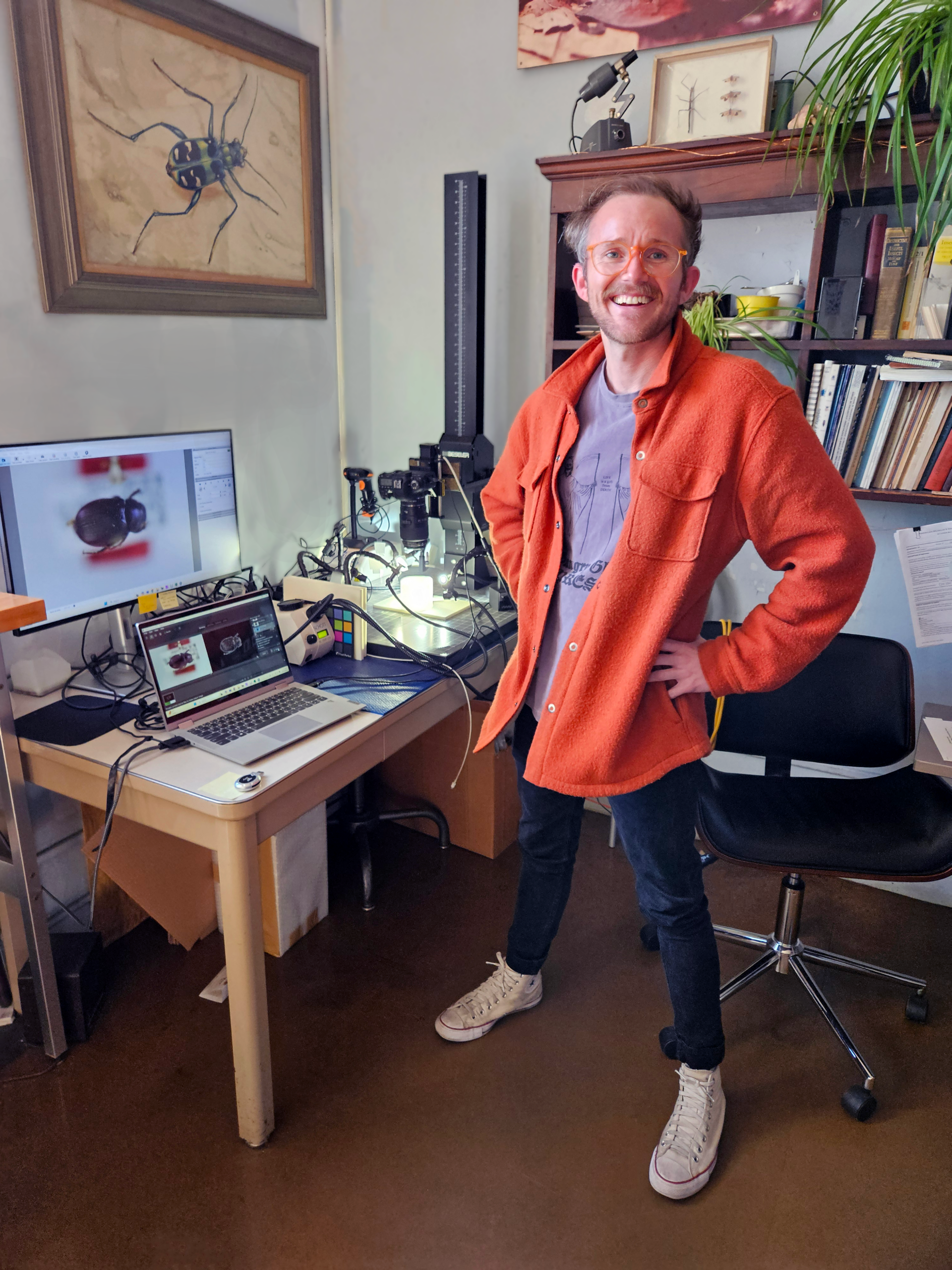
“One remarkable thing about our museum collections is that we have hundreds of years’ worth of specimens from all over the world and there are hundreds of specimens in our collection that are new species that have never been described,” Smith said. “That’s kind of exciting; it’s like a little treasure chest with all these things that we don’t know what they are yet, and a lot of them probably will not be acknowledged as a new species in my lifetime, and maybe not ever, before they disappear.”
Each museum specialist has a unique set of skills, and many spend time in the field collecting specimens to bring back to the collection. LeBeau and Smith have traveled to Guyana to collect materials as part of an exchange with Georgetown American University. While their journey brought them to an arid, savannah region near the Brazilian border, Senior Museum Specialist Pío Colmenares has spelunked through caves and waterfalls to capture arachnid specimens in South America.
“The museum houses one of the most comprehensive scorpion and spider collections in the world,” Colmenares said. “The tissue samples we’ve collected are used for DNA sampling and systematic research.”
For those interested in viewing the collection outside of research labs, the museum calls for interns and volunteers once a year to assist in refreshing the ethanol used to preserve many of the specimens.
If it flies, creeps, or crawls, chances are it has a home at the American Museum of Natural History.
Bug facts with Local 1559
1. While they used to be two separate insect orders, all termites are now considered cockroaches. One group of cockroach, the wood roach, eats wood and has the same microbes in its gut as termites to digest cellulose. They’re not born with it and instead pass it along to one another, inoculating other members of their species so the wood can be digested.
2. There are more than 20,000 species of bees. While all bees are important pollinators, the majority of bees do not make honey and are not social. Most live alone in small burrows excavated in the ground, the stems of plants, and even buildings.
3. There is a whole group of bees found in the tropics that are considered stingless bees. They are social and make honey.
4. Unlike most insects that have four wings, flies have only two modified wings and two halteres. Halteres function like gyroscopes and allow flies to do acrobatic maneuvers that many insects cannot do.
5. The velvet ant, a type of wasp that resembles a fuzzy ant, is also known as ‘Cow Killer,’ due to the painful nature of its sting. The velvet ant’s coloration and markings are a warning that you don’t want to mess with it!